
Collision warning ahead
Collision warning measures the closing distance to the vehicle ahead and warns the driver before a rear-end becomes unavoidable.
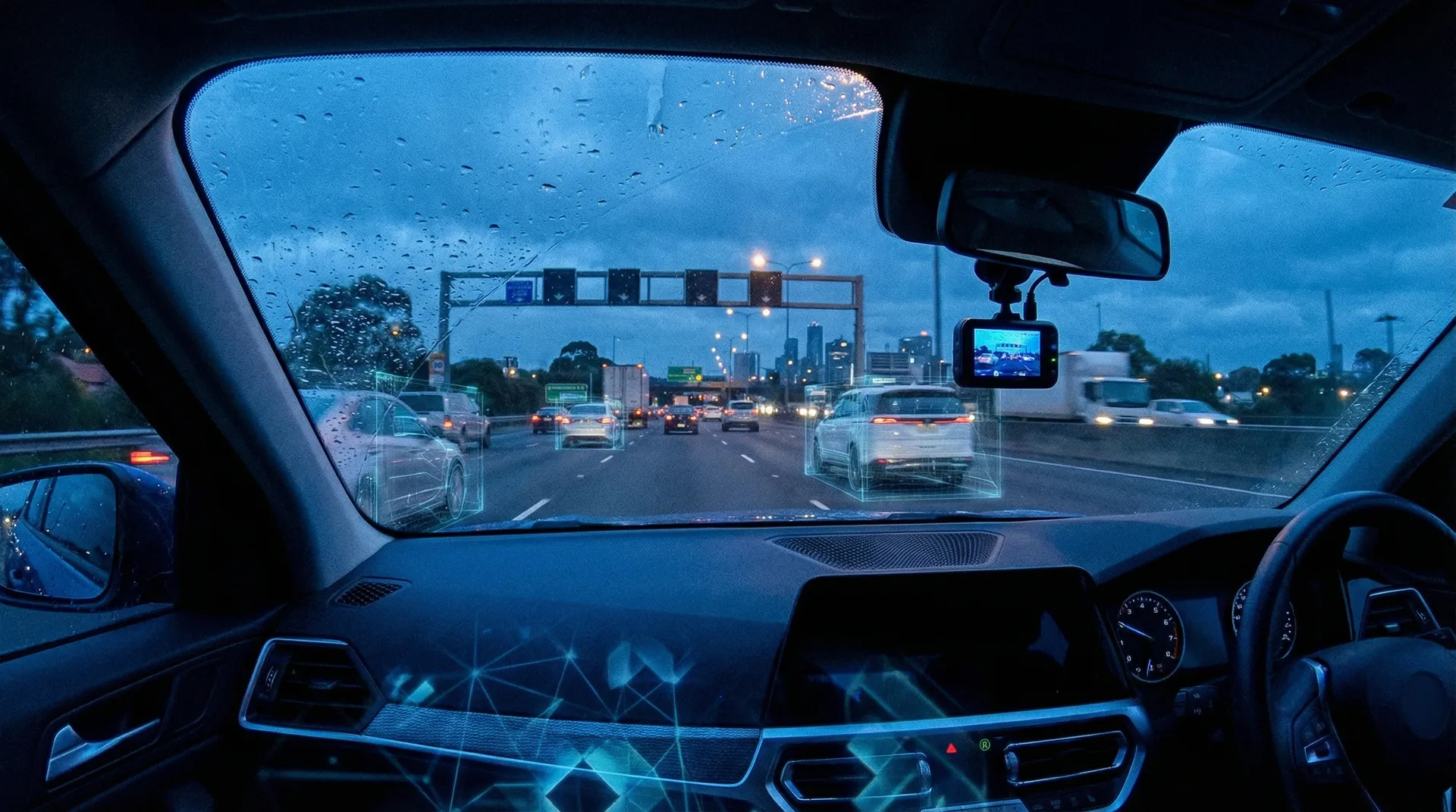
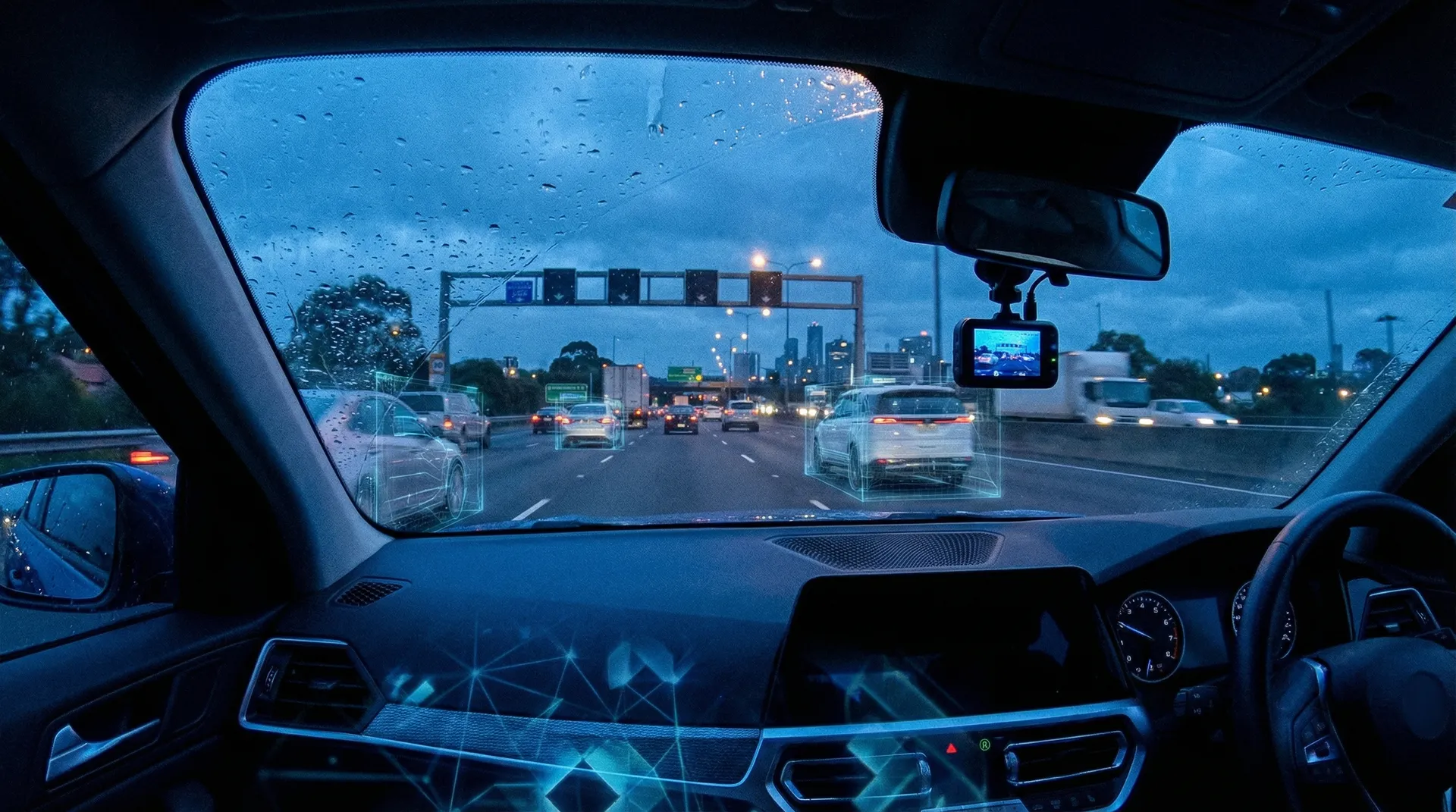
Ctrack Crystal Vision puts on-device AI in every cab: road-facing ADAS plus driver-facing fatigue and distraction detection, with 4G upload, GPS and offline buffering built for harsh Australian conditions.






Review the AI dash cam fleet hardware in a personalised demo: live drowsiness and distraction detection, road-view ADAS, and how the footage lands risk-classified on one Australian-hosted Crystal platform.
An AI dash cam analyses what it sees in real time, not only stores it. Ctrack Crystal Vision is the AI dashcam layer of the one Crystal platform: a dual-channel AI unit carrying two lenses, with a built-in AI processor running the AI models in the cab through every ignition-on shift. Against a standard dash cam, that is the difference between footage and prevention. It is the safety end of a wider telematics solution, delivering real-time driver safety alerts rather than footage that is rarely reviewed.
The road-view dash lens is the ADAS half. It reads the traffic ahead for rear-end risk, lane departure, tailgating and pedestrians. The in-cab AI lens is the DMS half (driver monitoring). It reads the person behind the wheel for drowsiness, distraction, phone use, smoking and a missing seatbelt. Both run at once, so this AI dash cam sees the road and the cab together, lifting fleet safety from one unit.
Because the AI runs locally rather than in the cloud, the warning reaches the cab in real time and keeps working even where mobile coverage drops. This is the hardware behind our driver monitoring and fleet dash cam work, without repeating them.
This is commercial in-cab camera hardware engineered for fleet operating conditions, not a consumer windscreen device. Every Crystal Vision dash camera pairs the same AI technology with rugged optics. One unit captures, reads and uploads, and every one of your fleet vehicles reports to the same Crystal platform. When you need proof of an event, the footage is already there.
The road-view lens uses on-board AI to detect risk on the traffic ahead. Around 63.5% of serious truck crashes trace to human factors such as inattention, inappropriate speed and following distance (NTI/NTARC), the exact behaviours a road-view fleet dash cam is built to catch. We frame this as an industry benchmark, not a Ctrack result.
Collision warning measures the closing distance to the vehicle ahead and warns the driver before a rear-end becomes unavoidable.
Lane Departure Warning flags drift out of lane, and Headway Monitoring alerts on tailgating before the gap gets dangerous.
Blind-Spot warnings and pedestrian or cyclist proximity alerts protect vulnerable road users, reducing the low-speed strikes that hurt people around the vehicle.
For the road-safety outcomes behind these alerts, see our ADAS solution.
The in-cab lens is the tiredness detection camera. Drowsiness contributes to about 20% of all heavy-vehicle accidents in Australia (NHVR), and inattention and distraction show up in two of every five human-error losses (NTARC). These industry figures frame why scoring driving behaviour matters across a fleet of vehicles, where the AI lifts safety and efficiency together. Coaching the repeat behaviour with real video footage beats a lecture, not Ctrack accuracy specs.
This is the in-cab unit behind our driver monitoring work, paired with the road-view alerts above.
A 4G dash cam fleet rollout only delivers measurable value if the proof lands where you can use it. Here is how the AI algorithms move a Crystal Vision event from the cab to a searchable evidence library, lifting fleet efficiency across the entire fleet.
Computer vision reads the cab and the road every shift. The moment it spots tiredness, distraction or a road risk, it fires an audio and visual alert in the cab, with no signal needed.
The unit can record footage locally all the time, but uploads only the triggered clip alongside its location and speed data. If coverage drops, the clip buffers locally and syncs automatically when the signal returns. Routine driving is never stored, so the evidence you keep is exactly what defends insurance claims.
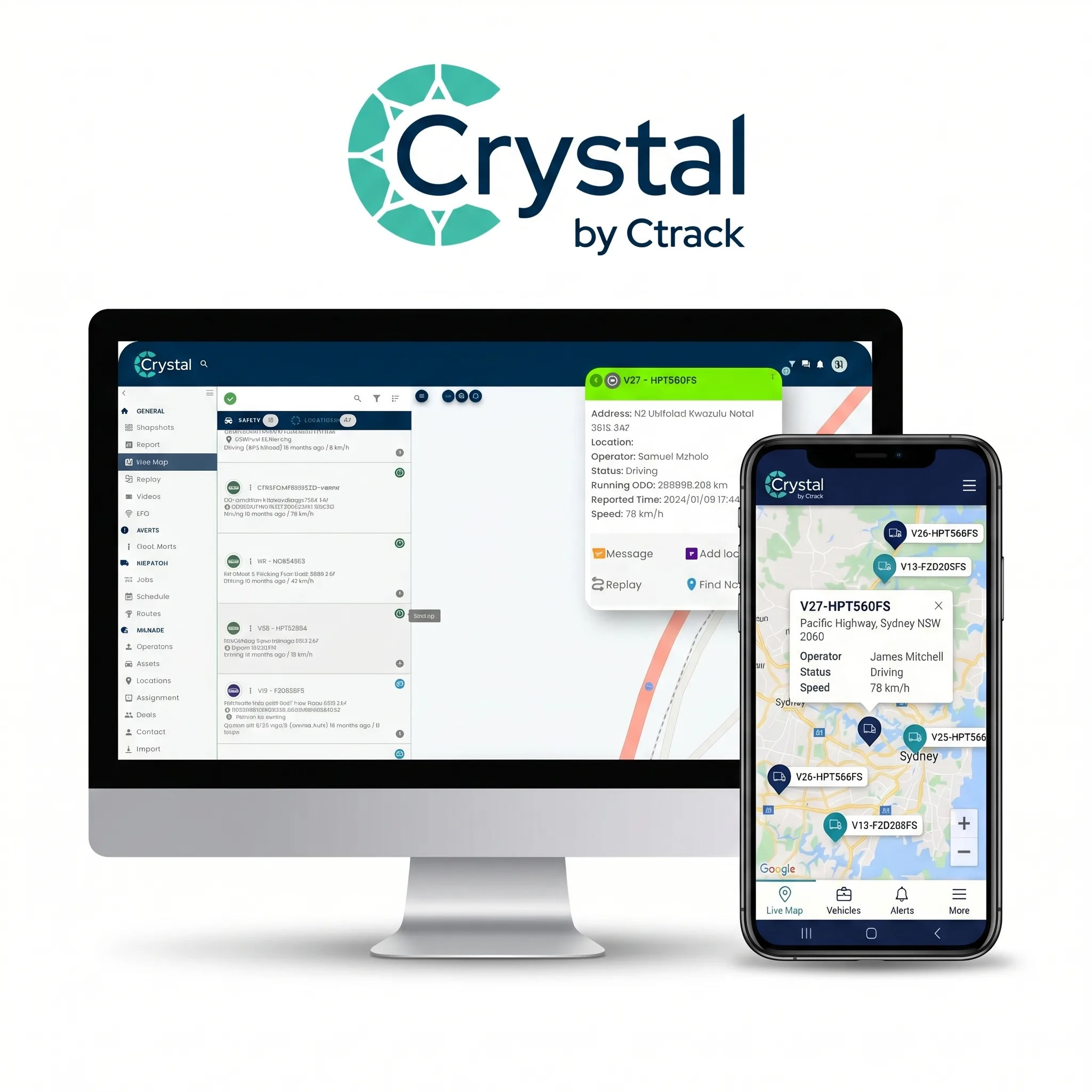
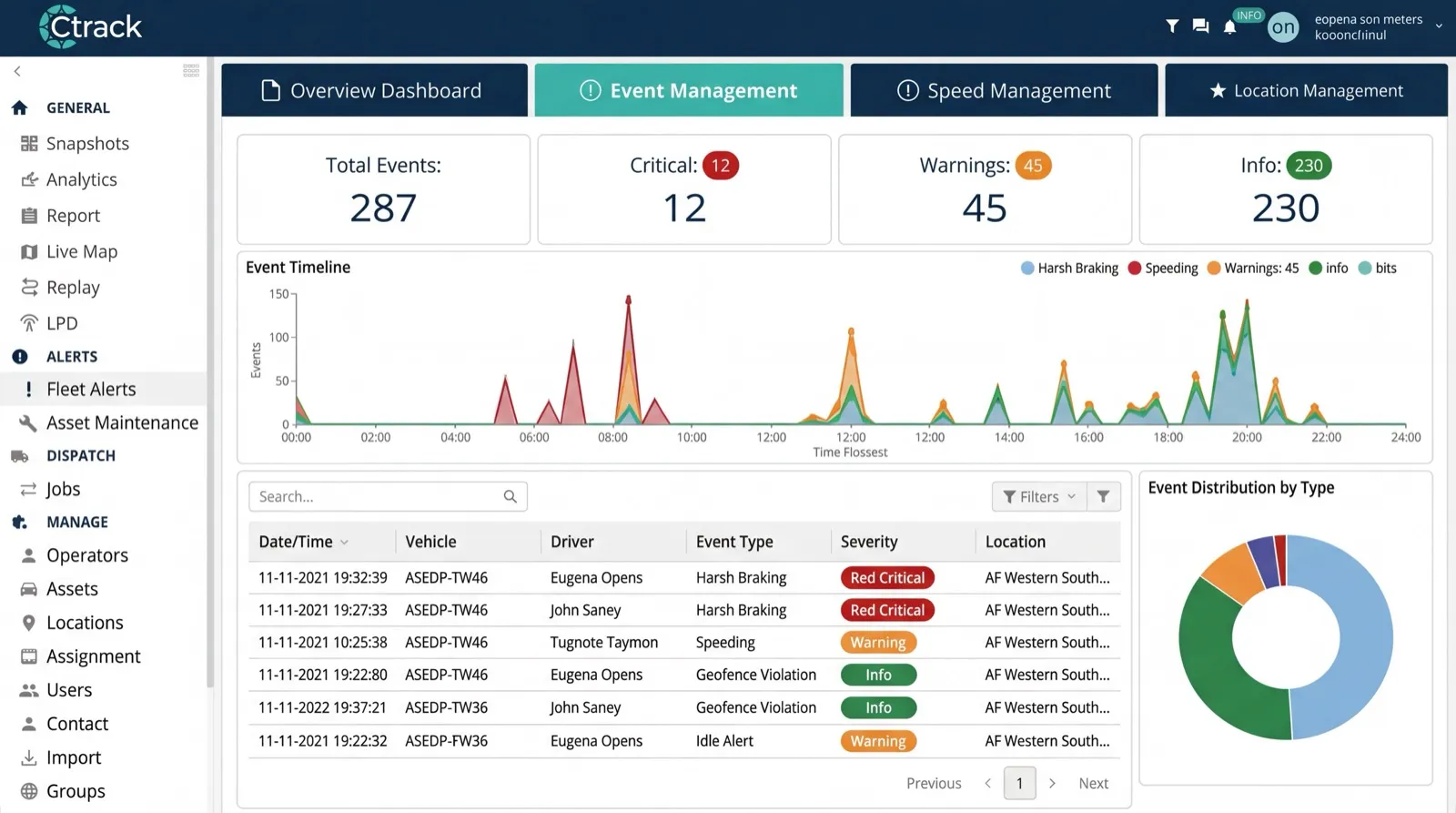
Each clip arrives location-, speed- and time-stamped, immutable and auto-classified High, Medium or Low risk, on the same fleet management platform as your tracking. The camera and tracker share one evidence library, so footage for later review is always one search away.
Crystal Vision ships as two fleet camera families on one platform, so a mixed fleet of utes through to B-doubles runs from a single login. Drowsiness alone contributes to 34.8% of heavy-vehicle driver fatalities (NTARC), which is why heavy vehicles in a modern fleet need the wider camera coverage of the MDVR. This is fleet AI that scales across your fleet and across fleet operations, drawing vehicle power from the ignition feed rather than one unit at a time.
A dual-channel dash cam fleet unit: one road-view lens and one in-cab lens. This is the two-channel dash cam fleet option for utes, vans and light commercials that need ADAS plus DMS in one tidy install.
A 4 to 8 channel truck camera system that adds side and rear cameras plus two-way talkback into the cab. Built for heavy vehicles in bus and coach, waste management and mining.
The dedicated heavy-vehicle recorder family for trucks, buses and waste.
The commercial dash cam questions Australian fleet managers ask us most before they roll out.
A normal dash cam only records. Crystal Vision runs on-board AI that reads the driver and the road in real time, then fires an in-cab alert the moment it detects drowsiness, distraction, a phone in hand, no seatbelt, or a road risk like a rear-end or lane departure. The footage is the backup. The point is the warning the driver gets before a lapse becomes a crash. Every event lands risk-classified on the same Crystal platform as your tracking and compliance, not in a separate camera app.
The in-cab lens (DMS) detects drowsiness and microsleeps, distraction and eyes-off-road, phone use, smoking, no seatbelt, and a covered or obstructed lens. The road-view lens (ADAS) detects collision risk ahead, lane departure, headway and tailgating, blind-spot intrusion, and pedestrian or cyclist proximity. The MDVR adds side and rear channels for wider coverage on heavy vehicles.
Crystal Vision 2-CH is a dual-channel unit, one road-view lens and one in-cab lens, for utes, vans and light commercials. Crystal Vision MDVR is a 4 to 8 channel system for trucks, buses, coaches, waste and mining, where you also need side and rear cameras and two-way talkback into the cab. Both feed the same Australian-hosted Crystal evidence library, so a mixed fleet runs from one login.
Capture is event-based. The unit records locally while the ignition is on, but it only uploads a clip when the AI or the G-sensor detects a real event such as harsh braking, a speed event, or a drowsiness or distraction lapse. Routine driving is never stored or reviewed, which is why drivers accept it as protection rather than surveillance.
Yes. The AI runs on the device, not in the cloud, so detection and in-cab alerting keep working with no mobile coverage at all. Offline buffering keeps capturing the event locally where coverage drops, then syncs it automatically once the vehicle is back in mobile range, so you do not lose the evidence from a remote-road incident.
Every clip uploads to a single Australian-hosted Crystal evidence library held under ISO/IEC 27001 information security controls. Each event is GPS-, speed- and time-stamped, immutable, searchable, and auto-classified High, Medium or Low risk. You view, search and export clips through the Crystal portal. Verify the current default retention period with your Ctrack consultant before relying on it.
The Crystal platform is TCA Type-Approved and Ctrack is ISO/IEC 27001 certified as a company. The cameras are commercial-grade hardware built for Australian conditions, with infrared night vision on the in-cab lens and wide dynamic range on the road-view lens for glare and low light.
Crystal Vision is one part of the wider Ctrack hardware range, and it runs on the same Crystal login as your tracking and compliance. Pair the cameras with the GPS trackers and recorders below to run a mixed fleet from one platform.
Book a demo to see how AI reads the cab live: drowsiness and distraction alerts, road-view ADAS, and how every event lands risk-classified on one Australian-hosted Crystal platform.