
Chain of responsibility compliance for transport fleets
Every party that schedules, loads, or moves heavy vehicles faces up to $4.23 million in corporate fines and five years imprisonment for individuals (NHVR, indexed). Ctrack fleet management software provides centralised digital records, automated reporting, and audit-ready documentation for your operations.







Prove your duty of care, on demand
- Produce audit-ready duty-of-care records: timestamped evidence instead of manual spreadsheet reconciliation.
- One record, not five systems: telematics, fatigue and certified EWD data in one place.
- Automated NHVR reporting: the audit reports your team rebuilds by hand, generated for you.
- Your work diary keeps running: integrates with certified EWD providers, it does not replace them.
- Local CoR expertise: Australian-hosted, built around the HVNL and your duty of care.
Book a Demo
Review Ctrack's Chain of Responsibility tools in a personalised demo to see how audit-ready evidence and automated reporting prove your duty of care.
Chain of Responsibility (CoR) duties
Chain of responsibility (CoR) is the legal framework under the Heavy Vehicle National Law that holds every party in the road transport supply chain accountable for safety. The chain of responsibility legislation applies to heavy vehicles over 4.5 tonnes operating in the ACT, NSW, QLD, SA, TAS, and VIC. Western Australia runs equivalent heavy vehicle duties through Main Roads WA rather than the HVNL. To understand the chain of responsibility, start here: everyone in that supply chain shares the responsibility to ensure the safe transport of goods across Australian roads, whether or not they ever sit behind the wheel.
These responsibilities under CoR extend well beyond drivers responsible for the safety of their own trips. Consignors, loaders, schedulers, operators, executives, and directors all carry a safety duty under CoR. Each must take all reasonable steps to prevent a breach of mass, dimension, fatigue, speed, dangerous goods, or maintenance standards. That shared accountability is why every party needs documented risk management, not a verbal assurance.
The National Heavy Vehicle Regulator enforces these laws through audits and investigations. Missing records or a failure to show reasonable steps can trigger a Category 1 offence carrying maximum penalties of $4.23 million for corporations (NHVR, indexed). Sound governance depends on proactive risk management and a documented safety management system you can produce on request.
Many operators pair CoR compliance with heavy vehicle accreditation modules (mass management, maintenance and fatigue management), which supply much of the same documented evidence a CoR audit expects.
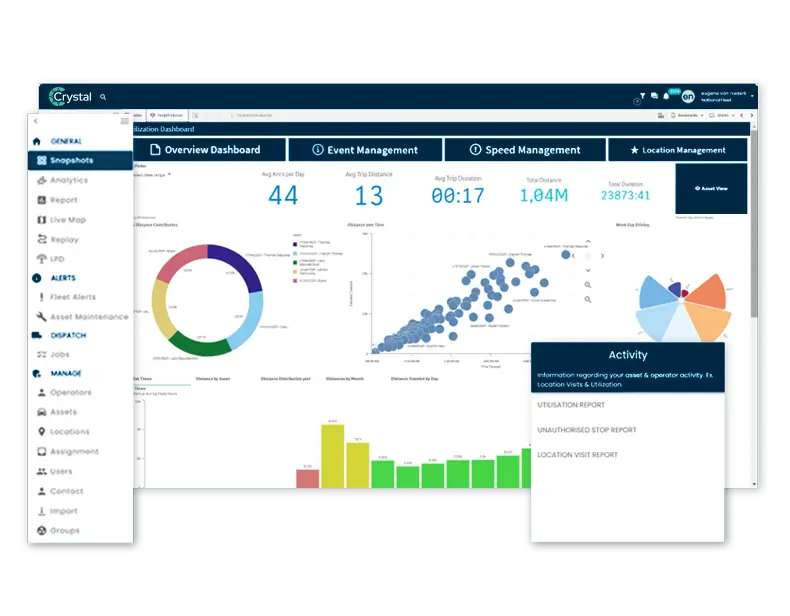
Chain of Responsibility safety management system
Audit-ready evidence, built in. The point of CoR is to ensure every party along the chain can show what they did, so Ctrack lands telematics, fatigue data, and certified EWD records in one place on one Australian-hosted platform. Proving the reasonable steps to ensure safety becomes a search rather than manual spreadsheet reconciliation, and your existing work diary keeps running alongside it.
Predict
Foresight that keeps your fleet moving. Anticipate maintenance, optimise routes, and reduce costs before issues arise.
Protect
AI-powered safety without surveillance. Real-time fatigue detection, driver coaching, and claims exoneration.
Comply
Governance that scales with the fleet. Centralised data, audit-ready reports, and continuous regulatory alignment.
CoR primary duty for each party
Under the HVNL, every party has a primary duty to keep their transport operations safe so far as is reasonably practicable. If you are part of the chain that sends or receives goods, the function you perform decides your duty: a party in the CoR can be the driver, scheduler, consignor, loader, packer, or operator, and the roles often overlap, so a single business may hold several at once. Each one must ensure the safety of heavy vehicles through active management of fatigue, vehicle loads, maintenance, speed, and mass limits. Anyone involved in the chain who fails to eliminate or minimise a foreseeable risk faces serious penalties under these transport laws, and the heavy vehicle transport industry as a whole is held to that same standard for heavy vehicle safety.
Identify Foreseeable Risks
As a CoR party responsible for the safety of your transport activities, you must identify safety risks and implement controls to ensure safety. Documented procedures and management plans demonstrate you have taken reasonable steps.
Fatigue Alerts
Ctrack helps you manage driver fatigue across the operation. Alerts notify you when work and rest hours approach their limits before a breach occurs, supporting your duty of care for heavy vehicles on the road.
Maintenance Scheduling
Maintenance reminders stop heavy vehicles operating with overdue services, a primary duty under the codes of practice. Trip logs capture every transport task with timestamps and GPS coordinates, so you can show you comply with verifiable records.
Audit-Ready CoR Compliance Records
Auditors expect comprehensive records covering every aspect of your compliance position. Fragmented systems create gaps that can lead to safety breaches during inspections.
Ctrack centralises documentation in one platform. PDF reports compile driver hours, trip histories, maintenance schedules, and safety events with timestamps. You can generate a report covering any date range in minutes, ready to hand to an auditor.
Real-time monitoring of work and rest hours for heavy vehicles, with breach alerts.
Every journey captured with timestamps and coordinates.
Identify when heavy vehicles exceed limits, with location evidence.
Generate audit documentation in minutes, not hours.
One platform for Heavy Vehicle National Law obligations
Managing fleet operations across multiple systems leaves gaps in visibility. Ctrack pulls data from across your operations into one dashboard, so every party can see and act on its obligations under the HVNL.
Unified Dashboard
The platform combines GPS tracking, driver work diaries, maintenance schedules, and safety events in one view, giving every party full visibility over the safety of their heavy vehicles.
EWD Integration
Integration with certified Electronic Work Diary providers gives you precise fatigue tracking and helps ensure drivers stay within their hours across the transport chain, with no change to your existing road transport workflows.
Real-Time Alerts
Alerts notify managers when a vehicle approaches a service interval, a driver nears a work hour limit, or a speed event occurs, so all parties involved in the chain get time to act before it becomes a breach. That is compliance across the chain, in real time.
Avoid CoR Non-Compliance Penalties for Heavy Vehicles
A serious incident carries severe consequences. Category 1 offences attract maximum penalties of $4.23 million for corporations and $436,850 plus five years imprisonment for individuals (NHVR, indexed). Every party, from the scheduler to company executives, can be held personally liable.
Under the CoR laws, parties in the supply chain share the legal obligations for preventing incidents. Beyond the financial penalties, a breach damages business reputation and lifts insurance costs. A serious incident triggers an investigation that disrupts operations and can expose gaps in your safety culture.
- Active monitoring reduces penalty exposure for your organisation
- Real-time monitoring identifies issues before they escalate
- Automated alerts give you time to intervene
Penalty Categories
Demonstrate due diligence and reasonable steps
When the regulator asks what you did to comply, you need to show the reasonable steps you took to prevent breaches, not describe them. Executives must exercise due diligence to ensure their business complies: directors actively verify controls, not just sign off on them. That is the executive duty. Ctrack timestamps the evidence, with monitored controls, investigated incidents, and corrective action recorded against the relevant codes of practice and the NHVR's primary duty obligations guidance.
Interface reflects Australian regulations
Match work and rest hour regulations
Templates align with regulator expectations
24/7 customer support team
Implementation typically takes six to eight weeks. Transport and logistics operators, construction companies, mining haulage, and agricultural carriers all run their heavy vehicle compliance on Ctrack. When every party can share the responsibility to ensure the safety of each load, you raise road safety standards across the whole operation.
Chain of Responsibility: Frequently Asked Questions
CoR sits across the rest of your heavy vehicle obligations. These pair directly with the records on this platform.
Certified EWD data feeds straight into your audit evidence, no double entry.
Digital daily inspections that timestamp roadworthiness against each vehicle.
Turn the same GPS trip data into substantiated off-road FTC claims.
Fuel and distance data rolled into the reports your sustainability team needs.
The hardwired devices that capture the trip, speed, and location evidence behind it all.
The full picture of how Ctrack keeps Australian heavy vehicle fleets audit-ready.
See your audit evidence, fatigue data, and reporting work together in one Australian-hosted platform. Book a personalised demo or model the return first.