Fleet dash cam with AI alerts and event-based evidence
Ctrack Crystal Vision watches the road and the cab, warns the driver the moment a collision risk, fatigue or distraction appears, and saves risk-classified, Australian-hosted footage you can pull in seconds to clear a not-at-fault driver. Privacy-first event-based capture your fleet drivers accept, on one Crystal platform.







What you get from a Crystal Vision demo
- Not-at-fault claims evidence: timestamped road and in-cab footage that helps exonerate your driver.
- AI alerts in the moment: fatigue, distraction and collision warnings fire in the cab, not after the incident.
- Coaching, not just recording: risk-classified clips drive a self-coaching workflow on one platform.
- Privacy-first, event-based: only triggered safety events upload, with role-based access.
- One Australian-hosted platform: footage, alerts and driver scorecards on one Crystal login.
Book a Demo
See Crystal Vision flag a live event, warn the cab and pull the clip. Book a personalised demo with our team.
Fleet dash cam evidence before the next dispute
When an incident happens without footage, your driver carries the blame, the dispute drags on, and the premium follows. Most serious crashes are not your driver's fault: in serious heavy-vehicle-and-car collisions, the heavy-vehicle driver is not at fault in 85.7% of fatal cases (NTI, 2025 NTARC report). Without footage you cannot prove it, you cannot see the near-miss that came first, and you cannot coach the behaviour that caused it.
He-said-she-said disputes
With no footage, an incident becomes a long battle of conflicting accounts. That drives up settlement costs and the premium at renewal.
False claims against drivers
Professional drivers face fraudulent injury claims and staged accidents. Clear video evidence stops these before they reach court.
No visibility into events
Safety managers have no way to review a near-miss, understand what caused a collision, or coach a driver on what actually happened.
Commercial dash cam road and in-cab capture
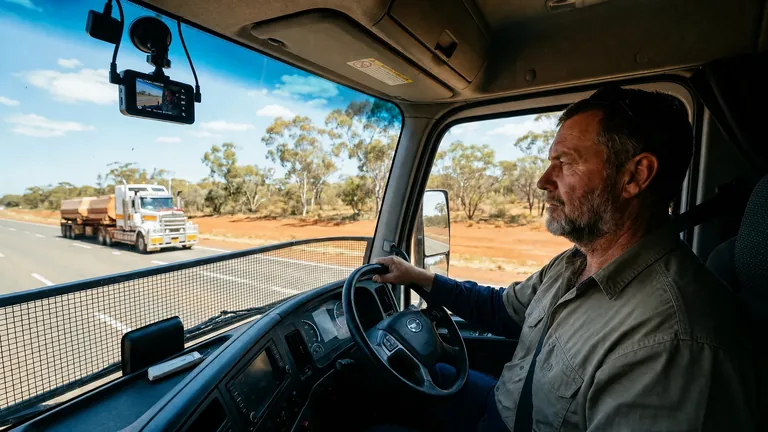
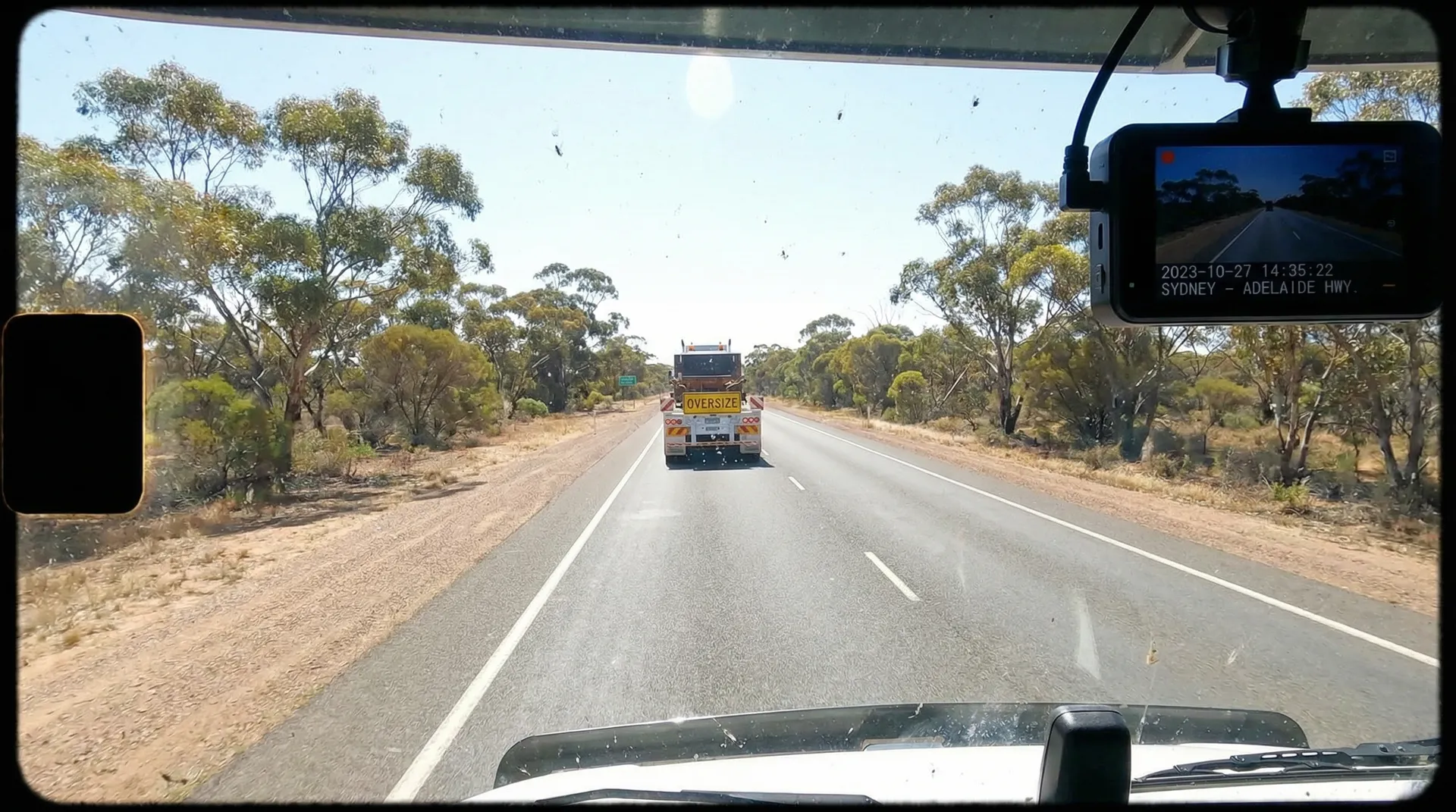
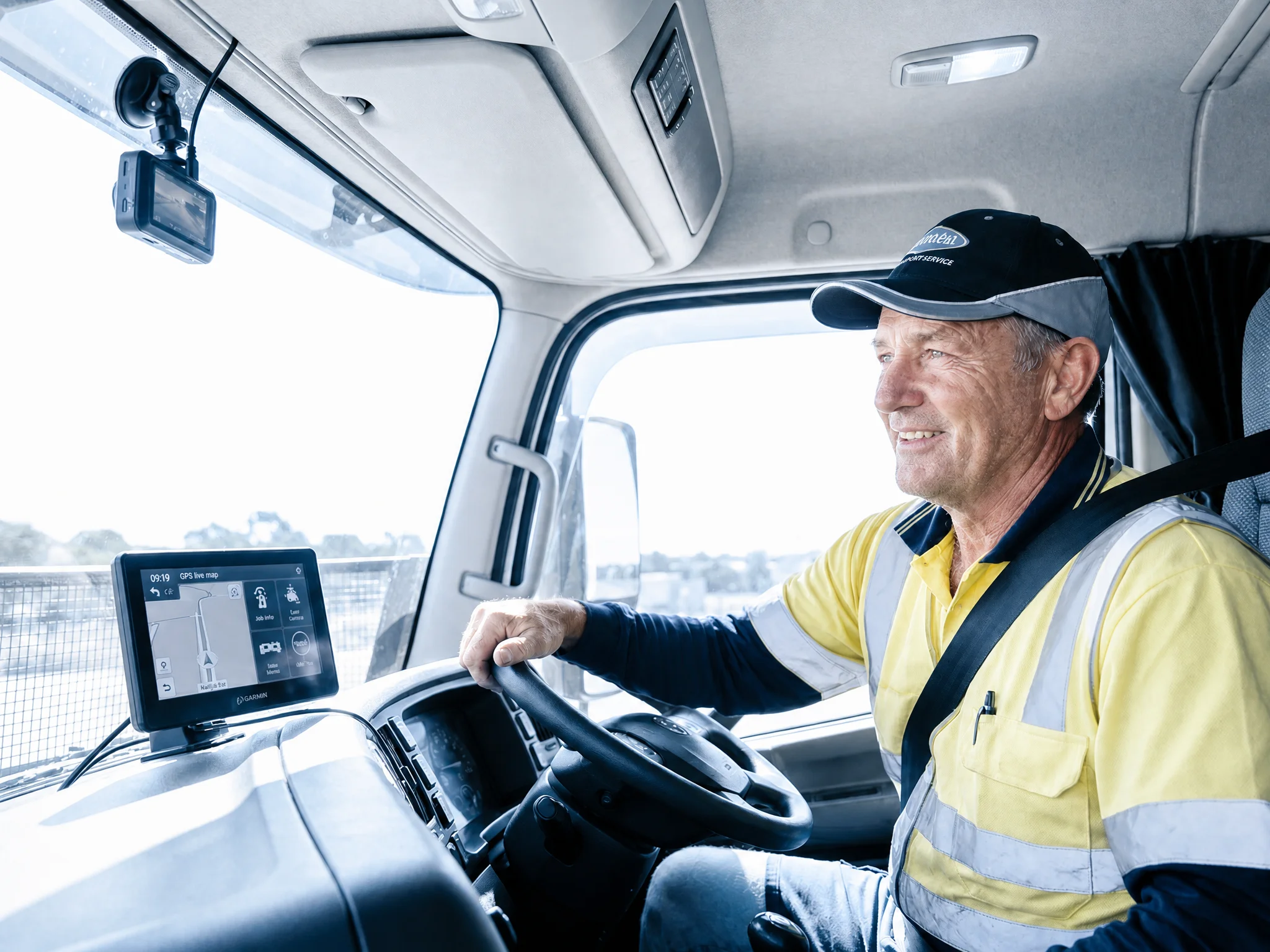
A single Crystal Vision unit runs two lenses with two jobs. The forward-facing lens reads the traffic ahead while a driver-facing lens reads the state of the driver, so one camera covers the risk outside the cab and the person behind the wheel. This is high-quality video: every clip is location-linked to the live map, and the unit buffers offline and uploads over 4G when coverage returns.
- Dual HD lenses: Road facing and driver facing capture in one unit, for full vehicle safety cover.
- Event triggers: G-sensor and AI triggers fire on harsh braking, collision or a flagged behaviour.
- Location-linked footage: Real-time location, speed and the trip tie to every clip on your live map.
- Offline buffering: Keeps capturing without coverage, then uploads triggered events over 4G.
AI dash cam analysis that flags fatigue, distraction and collisions
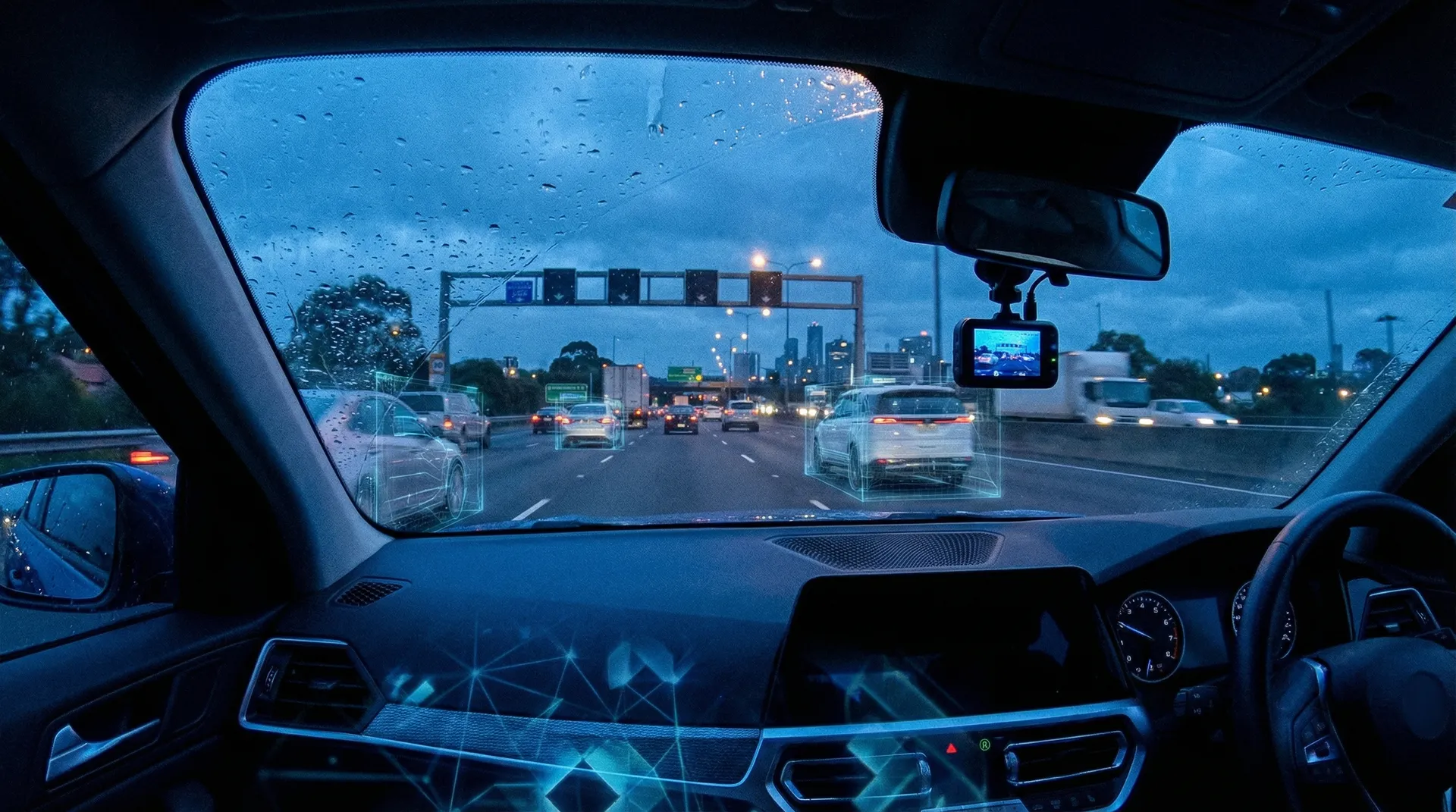
Crystal Vision does the analysis on the device, identifying the moments that lead to a crash and flagging them as they happen. The road-facing lens runs ADAS, with forward collision, lane departure, tailgating and blind-spot alerts. The driver-facing lens reads the cab for fatigue, distracted driving, phone use and seatbelt status. The instant a risk appears, an in-cab warning fires so the driver self-corrects before the lapse becomes an incident. This is advanced dash camera analysis, not passive footage.
Fleets running comparable AI video platforms have reported roughly a 40% reduction in risky driving behaviour in the first year. That is an industry benchmark, not a Ctrack guarantee, but it comes from the same loop Crystal Vision supports: detect the behaviour, surface the clip, then coach drivers with the footage. Used this way, the camera improves driver performance instead of just recording it.
Driver-state monitoring. On-device AI reads fatigue from eye closure, head pose and yawning, plus distraction, phone use and no seatbelt, giving live in-cab feedback before the lapse becomes a crash. It is the practical way to monitor driver behaviour without watching a live feed, and the basis of a dedicated driver fatigue monitoring system.
Road-facing ADAS. Forward collision, lane departure and tailgating warnings read the road ahead and give the driver time to react, the road-facing half of the safety picture.
Two-way talkback. Live voice straight to the cab for a welfare check, a route diversion or in-the-moment coaching when an event is flagged.
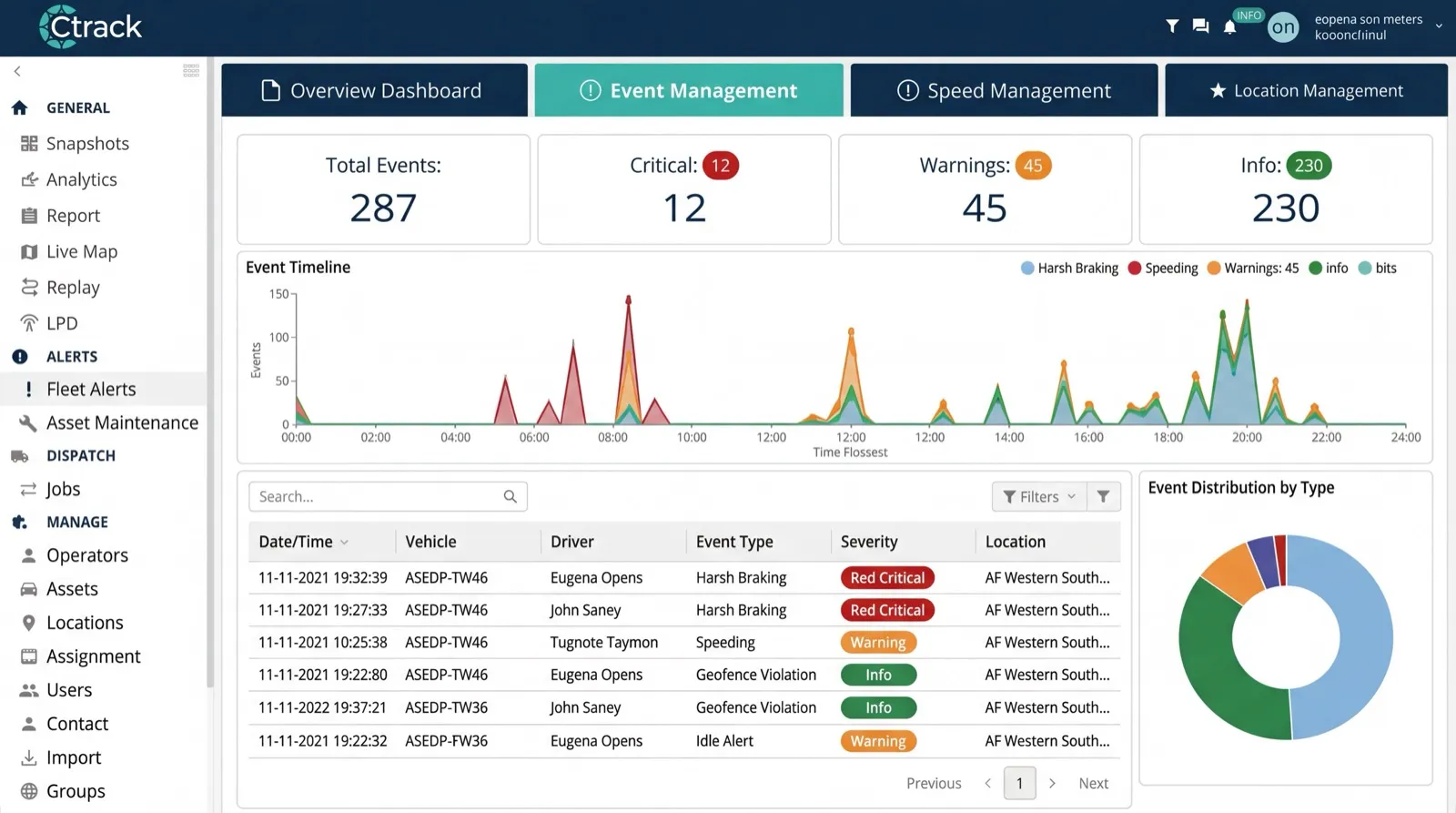
Risk-classified clip library. Events arrive sorted High, Medium or Low, so fleet managers review the clips that matter instead of scrubbing hours of video footage.
From footage to action in seconds. A standard recorder leaves you searching hours of video after the fact. Crystal Vision classifies the event the instant it happens, so a fatigue or distraction trigger reaches the right person while there is still time to coach.
Driver-facing detection. Fatigue, distraction, phone use and seatbelt status read in the cab, kept to triggered events for fairness.
Road-facing safety. A forward collision or lane departure alert warns the driver before a near miss turns into vehicle damage.
TCA Type-Approved platform. Australian-hosted footage with role-based access, ready for safety and compliance review.
Event-based recording that protects driver privacy
The biggest objection to a cabin camera is driver privacy. Event-based recording answers it: the unit holds footage locally and uploads only the moments that matter, so the camera captures a near-miss, not routine non-safety footage. That is the privacy-first approach to cabin monitoring, and it is what most fleets choose.
It also reframes the footage as coaching rather than punishment. Risk-classified clips feed manager review queues and driver scorecards, and a self-coaching loop lets drivers see and correct their own driver behaviour. Used as driver training, the camera becomes a development tool your team adopts instead of resists, and it lifts driver safety across the fleet.
For company-owned vehicles, pair it with a clear workplace policy and driver notification. Crystal Vision gives you the role-based access and configurable retention that support those obligations, with every clip hosted in Australian data centres. Event-based capture is the design that wins adoption and helps you improve safety without surveillance.
Privacy-first by design. The camera captures locally but only triggered safety events leave the cab. It is not a live feed of every minute behind the wheel, which is what wins driver and union acceptance.
- Event-only upload: Footage uploads when an AI flag, harsh event or manual trigger fires, not continuously.
- Configurable retention: Set retention to match your compliance obligations and privacy standards.
- Role-based access: Safety managers view footage, not the whole organisation, all on Australian-hosted infrastructure.
Fewer claims and faster settlements with video evidence
When your driver is not at fault, the video footage clears them and recovers the cost of a disputed claim, including staged crashes and other fraudulent claims. Every clip is immutable, time-stamped and stamped with location and speed, and an Export Task builds a court-ready package in minutes instead of a multi-week back-and-forth. That audit-ready record of fatigue and driver-behaviour management also supports Chain of Responsibility and your duty of care.
Most serious crashes are behaviour-driven and preventable: the part location data alone misses, and the part an AI camera detects and coaches.
63.5% of serious heavy-vehicle crashes are caused by human factors such as fatigue, distraction and following distance (NTI/NTARC).
Fatigue contributes to roughly 20% of all Australian heavy vehicle accidents (NHVR).
Dash cams for trucks and light vehicles
One platform fits a mixed fleet of vehicles. Light vans and utes take a 2-channel road and driver-facing unit, while heavy vehicles such as buses, coaches, waste and mining trucks take multi-channel coverage around the vehicle that adds side and rear views. A tow truck or specialist rig slots into the same camera solution, so you are not stitching together separate boxes per asset type. Hardwired units add vehicle health data on powered machines.
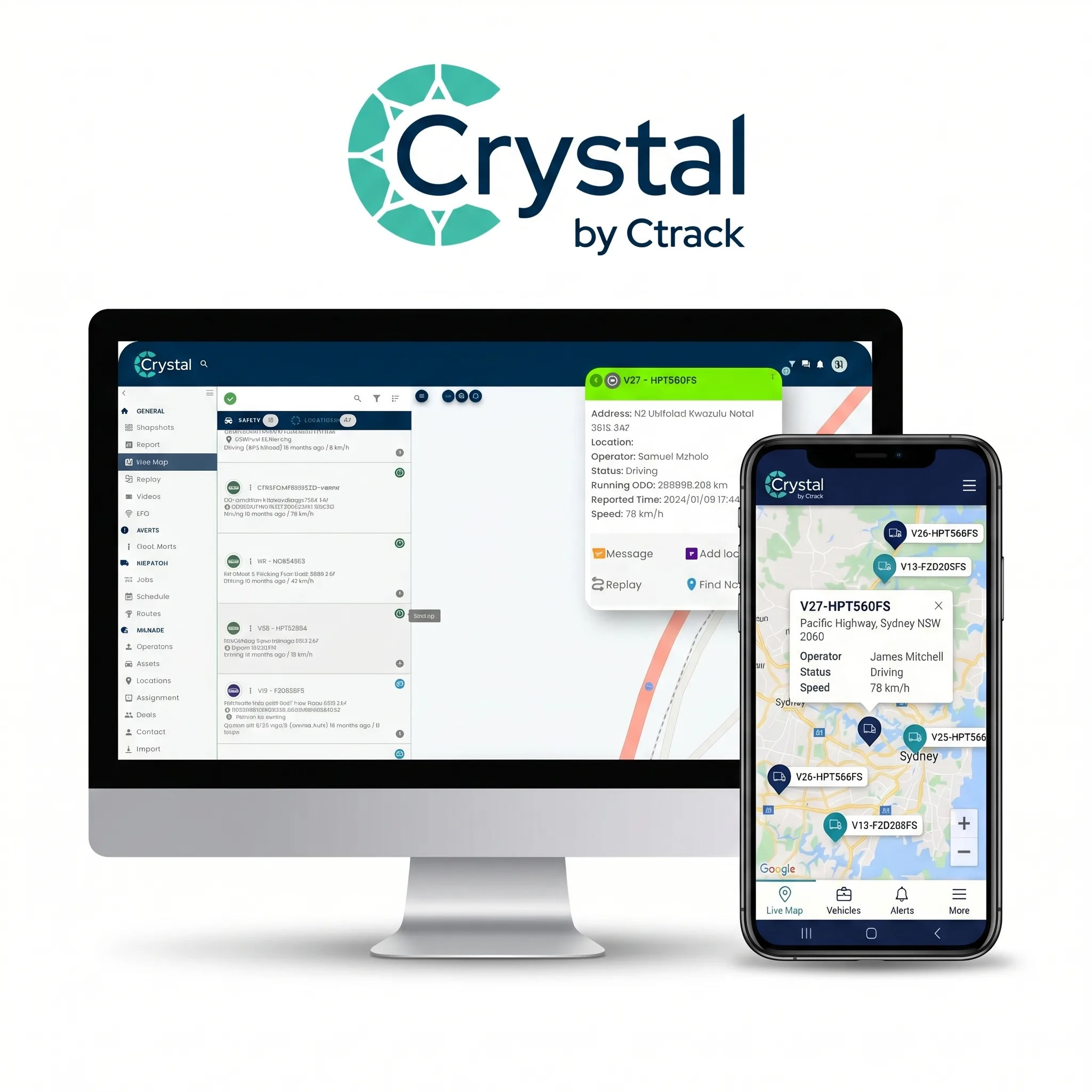
Get dash cameras installed across a handful of vehicles or several hundred, all reporting over 4G with offline buffering for remote Australian routes. Because the dash camera runs on the same Crystal platform as your GPS tracking and fleet management, you optimise fleet operations from one login. For device detail and heavy-vehicle multi-channel cover, our AI cameras and MDVR options slot into the same Crystal platform.
These commercial fleet dash cams pair with fleet tracking and the wider Crystal toolset, so the same dash cam solutions that protect a single van help you manage your fleet at scale. As a video solution and telematics solution in one, the Vision dash unit flags unsafe driving and feeds your overall fleet picture, while GPS tracking solutions pinpoint where each event happened. The features that matter most are the AI flags, the clip library and the coaching loop, and they scale as you add vehicles. When you roll out a dashcam programme, you deploy the right fit for each van or rig from one supplier.
- Trucks and heavy vehicles: Multi-channel HD across road, cabin, side and rear for rigids, buses, coaches and waste.
- Light vehicles: 2-channel road and driver-facing for vans, utes and service vehicles.
- Remote-route ready: Offline buffering holds footage with no coverage, then uploads over 4G on reconnect.
- Scales with you: From a few vehicles to several hundred on the same login and evidence library.
Fleet dash cam questions answered
Practical answers on how a fleet camera works, what your drivers should expect, and how the footage holds up for claims and compliance.
Fleet dash cam related safety and video solutions
The fleet camera sits within Ctrack's safety and video portfolio. Whether you are comparing fleet dash cameras, scoping fleet dash camera systems for a depot, or weighing dash camera solutions against a basic recorder, the same Crystal platform underpins them. Review the connected modules below.
The driver-facing half: fatigue, distraction and phone-use detection with in-cab alerts and scorecards.
The road-facing half: forward collision, lane departure and tailgating warnings ahead of a near-miss.
Video and location together, so the live map, the trip and the footage sit in one view.
Multi-channel HD capture for trucks, buses and heavy vehicles needing side and rear coverage.
The hardware behind the solution: device variants, channels and fitment for your fleet.
See Crystal Vision flag a live event, warn the cab and pull the clip on your own fleet.
See event-based capture, live driver alerts and a claim-ready clip library on one Crystal platform. Book a personalised demo with our local team.