
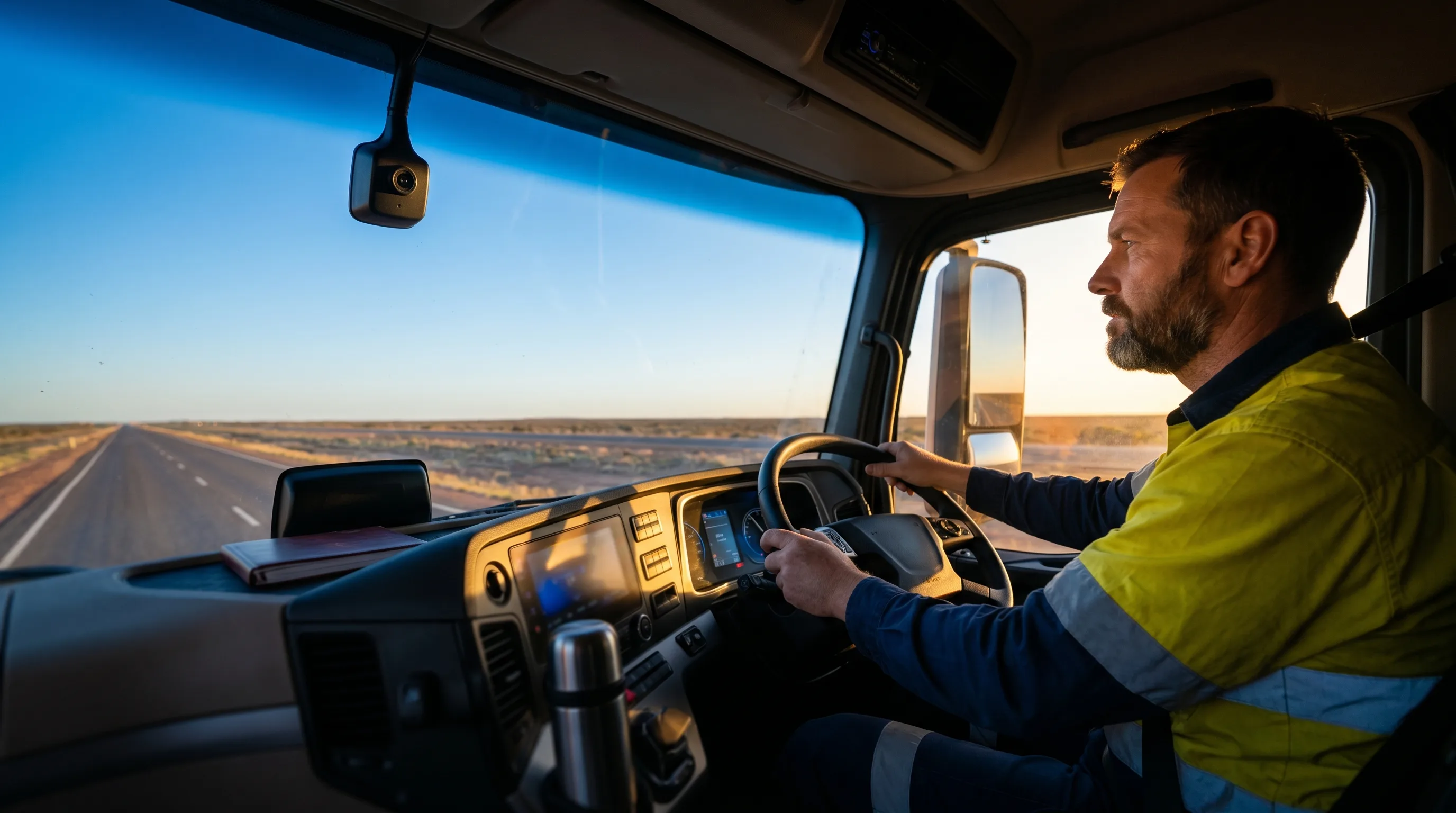
Driver monitoring system for Australian fleets
Detect fatigue and inattention with AI-powered DMS technology. Our driver monitoring system uses an infrared sensor to read the driver's state and warn them the moment risk appears behind the wheel. Ctrack brings driver safety into the same platform as vehicle tracking and fleet management, with in-cab and manager warnings that fire as events happen. Trusted by fleets across Australia.
Trusted by leading Australian fleets







Detect driver risk before it becomes a claim
- Detect tiredness and eyes off the road the moment they happen: telematics shows where the truck was, not whether the operator was alert.
- An immediate in-cab warning: an audible and visual alert lets the driver self-correct before a lapse becomes an at-fault crash.
- Event-based, not always-on: only triggered clips upload, risk-classified with GPS, speed and time into one searchable evidence library.
- One Crystal platform: DMS, road-view ADAS and GPS share one login and one Australian-hosted evidence library, built for Chain of Responsibility.
- Coach, do not just detect: human factors drive 63.5% of serious truck crashes (NTI/NTARC), drowsiness and inattention included, so risk-classified clips and self-coaching protect your team.
Book a Demo
Review Ctrack driver monitoring and Crystal Vision in a personalised demo to see how in-cab AI detects fatigue and distraction before they become a claim.
Driver fatigue monitoring before crash risk escalates
Tiredness and a glance away from the road cause most serious crashes, and your telematics cannot see either. Drowsiness contributes to around 20% of all heavy truck accidents in Australia (NHVR), and human factors drive 63.5% of serious truck crashes (NTI/NTARC). Ctrack Crystal Vision puts driver drowsiness detection in the cab as an advanced safety feature, so a microsleep becomes a coaching moment instead of a claim.
Tiredness the data never sees
GPS tells you where the truck was, not whether the operator was awake. Drowsiness detection reads prolonged eye closure, head pose and yawning, then warns the driver in the cab before weariness closes the gap.
Human factors, not vehicle faults
63.5% of serious truck crashes come down to the person at the wheel: tiredness, inattention and a moment of eyes off the road (NTI/NTARC). A drowsy operator turns dangerous in seconds, so detecting it in the cab is what separates a coaching note from a write-off.
A duty of care you can prove
Vehicle incidents account for 42% of worker fatalities in Australia (Safe Work Australia). When an incident is disputed, time-stamped evidence with GPS and speed shows what the operator was doing and protects them when they were not at fault. It is the road safety record a dispute turns on.
Driver monitoring system in-cab safety workflow
A driver monitoring system (DMS) is an in-cab AI camera that reads the person at the wheel in real time. As advanced safety technology, Crystal Vision actively monitors driver state: alertness oversight reads eye closure and head pose continuously while driving. DMS detects drowsiness, inattention, phone use, smoking and a covered lens, then warns the operator so they self-correct. Where occupant sensing tracks passengers, in-cab monitoring focuses on the road user, because that is where the risk and the duty of care sit. Crystal Vision runs the system as the cabin-side layer of one Ctrack platform, not a separate device in its own portal.
- Reads operator state, not just the road: the infrared (IR) system reads the operator's state in low light and at night, including eye closure, head pose, yawning, eyes off the road, phone in hand, no seatbelt and a covered lens.
- On-device AI, tuned to a lapse: the AI runs on the in-cab unit and is tuned to genuine operator state rather than blunt motion, so the warning fires on a real lapse, not every glance, and auto risk-classifies each event High, Medium or Low.
- One record, not a second portal: because DMS, road-view ADAS and your vehicle tracking run on the one Crystal platform, each in-cab event sits next to its location, speed and trip in a single record.
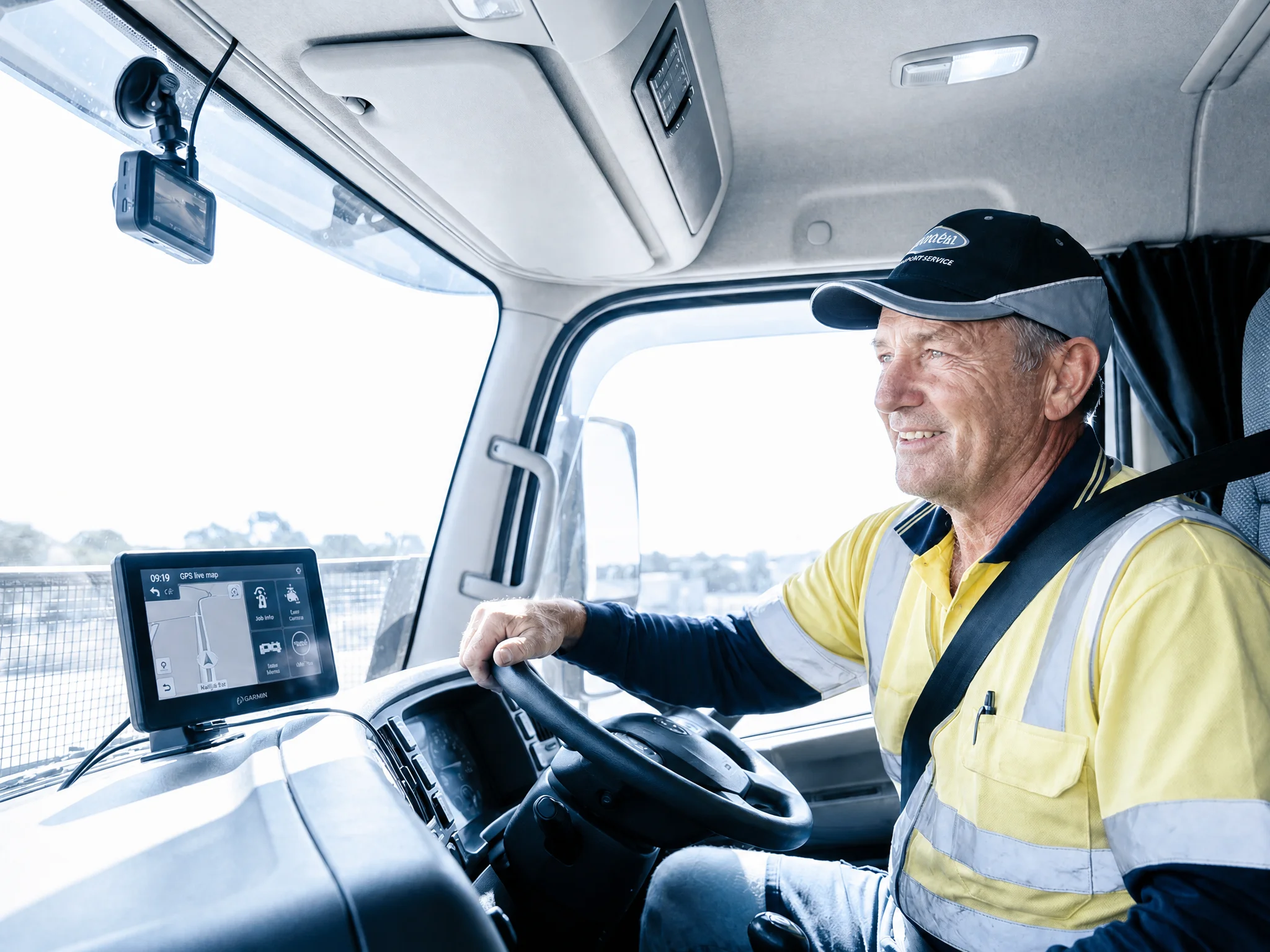
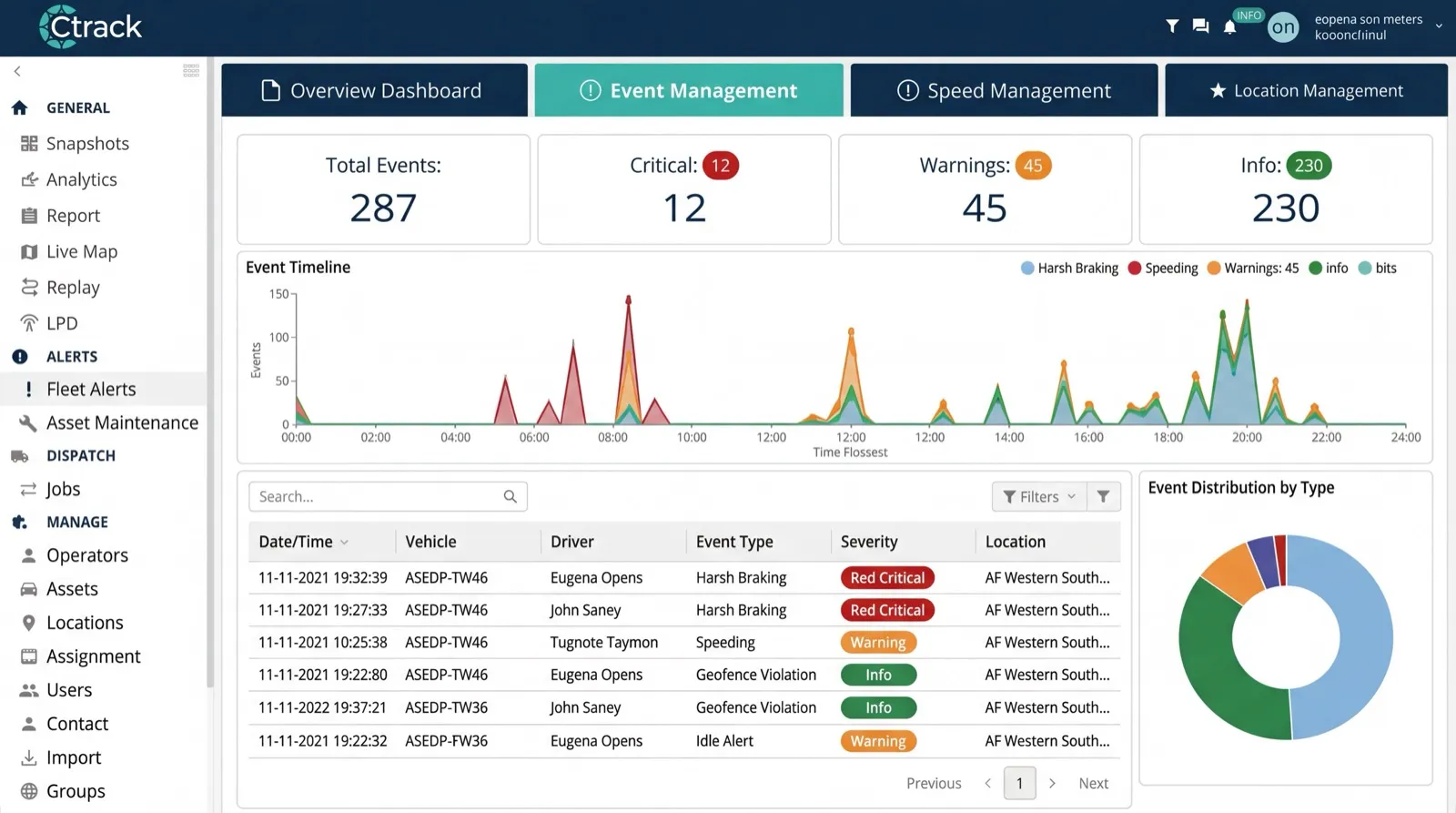
Driver monitoring in-cab AI unit workflow
The in-cab AI performs three functions in sequence: it detects a lapse, warns the operator to self-correct, then raises a manager event for coaching. The system reads the cab continuously while driving, but evidence capture is event-based, so only a triggered clip leaves the truck. That active intervention is what separates a driver monitoring system from standard evidence capture.
- 1Detect the lapse: the infrared system reads eye closure, head pose, yawning, eyes off the road and phone in hand. Local capture continues even where mobile coverage drops, then syncs once the truck reconnects.
- 2Warn the operator in the cab: an immediate in-cab audible and visual warning prompts the operator to refocus the instant a lapse appears, so most are self-corrected and never reach a manager. Manager notifications follow as the event happens.
- 3Review, coach and keep the evidence: every clip lands in a searchable, Australian-hosted evidence library. Managers review risk-classified clips in a queue, drivers see scorecards and a self-coaching workflow, and two-way talkback supports a live welfare check.
Distraction and inattention detection that telematics misses
Inattention and phone use appear in 2 of every 5 driver-error losses (NTI/NTARC). On-device inattention alerts flag phone in hand, eyes off the road, no seatbelt and smoking, then pair the in-cab DMS with road-view ADAS on one Crystal evidence library, so the road event and the operator's state sit in a single record. The cabin and road-view units assess risk together.
Cabin unit detection capabilities
- Phone in hand and prolonged eyes off the road
- Smoking, no seatbelt and a covered or obstructed lens
- Offline buffering keeps capturing where coverage drops, then syncs on reconnect
- Integrates with IVMS for government and commercial fleets
Road-view ADAS capabilities
- Forward collision and lane departure warnings on the same platform
- Headway and tailgating alerts paired with the driver-state event
- One evidence library for the road event and the operator's state together
- Role-based access and clear audit trails for compliance
Truck and commercial fleet driver monitoring across Australia
Transport, postal and warehousing carries the highest work-related fatality rate of any industry at 7.4 per 100,000 workers (Safe Work Australia), so a truck DMS earns its place fastest where the kilometres and the tiredness risk are highest. Crystal Vision is built for harsh Australian conditions, maps to HVNL and Chain of Responsibility duty of care, and keeps capturing on remote routes through offline buffering. It scales across a mixed fleet, from a single light truck to over 1,000 trucks, buses and plant.
Heavy vehicle and line haul
Long shifts and night running make heavy eyes the leading risk. Crystal Vision MDVR runs four to eight channels for prime movers and rigid trucks.
Bus, coach and waste
Passengers and stop-start routes raise the duty-of-care bar. Multi-channel recording and in-cab oversight cover the cab and the road.
Government, utilities and distribution
IVMS-grade reporting and role-based access suit council, utility and delivery fleets that need board-level evidence.
Driver safety monitoring system benchmarks
Tiredness and inattention are the human factors telematics cannot see. These are the Australian industry benchmarks that make in-cab monitoring a duty-of-care decision, not a nice-to-have.
Fleet driver safety camera advantages with Ctrack
A standard dash cam records the road for review after an incident. It cannot see the operator, so it never warns them in the moment. A safety system from Ctrack detects the lapse, classifies it and coaches it, on one Australian platform. A dash cam is evidence; this in-cab AI is prevention, and you get the evidence as well.
- One platform, not a bolt-on unit: in-cab monitoring, road-view ADAS and your telematics share one login and one evidence library, so an alertness event sits next to its location, speed and trip rather than in a separate device portal.
- Event-based, not always-on surveillance: only triggered events leave the cab. That privacy-by-design approach directly answers driver concerns about continuous surveillance, and it is why fleet teams accept it.
- Australian-hosted, built for CoR: evidence is hosted in Australia with role-based access and maps to your Chain of Responsibility duty of care. TCA Type-Approved, with local support that knows the HVNL and automotive safety standards.
- Coaching, not punishment: risk-classified clips and a self-coaching workflow turn the system into a development tool. Two-way talkback lets you check on a road user in the moment, not only after an incident.
Driver monitoring system FAQs
A standard dash cam records the road and tells you what happened after the fact. It cannot see the driver, so it never warns them in the moment. Ctrack Crystal Vision is the in-cab half: it reads operator state in real time, fires an in-cab audible and visual warning so the person behind the wheel self-corrects before a lapse becomes a crash, then sends a short risk-classified clip for coaching. A dash cam is evidence; the DMS is prevention, and you get the evidence as well.
The in-cab infrared AI camera reads operator state for drowsiness (prolonged eye closure, head pose, yawning), distraction and inattention (eyes off the road, phone in hand), plus smoking, no seatbelt, and a covered or obstructed lens. The same on-device AI pairs with road-view ADAS so the road user's state and the road event sit in one evidence library.
No. Crystal Vision uses event-based capture, not continuous surveillance. The system monitors driver state while driving, but only a triggered safety event uploads, with GPS, speed and a timestamp. It is not a live feed of the cab. Evidence is hosted in Australia and role-based access controls restrict review to authorised people, which is why drivers accept it instead of resisting surveillance.
The instant the AI reads a microsleep (prolonged eye closure) or a moment of inattention, the system fires an immediate in-cab audible and visual warning so the operator refocuses. The same triggered event uploads with a short clip, and the manager is notified through the event feed as it happens, auto risk-classified High, Medium or Low.
Yes. Every clip lands in a searchable, immutable, time-stamped evidence library hosted in Australia with GPS and speed attached, mapped to your Chain of Responsibility duty of care on the TCA Type-Approved Ctrack Crystal platform. Ctrack also integrates with NHVR-approved electronic work diary providers.
Yes. Local capture continues even where mobile coverage drops, thanks to offline buffering, then syncs once the vehicle reconnects, so events on remote and regional Australian routes are not lost.
It works for fleets of all sizes, from a single vehicle to over 1,000. The DMS integrates with your existing Crystal vehicle tracking and fleet management, so it is one platform and one login, not a separate device portal.
Pricing depends on fleet size, vehicle mix and configuration. Book a demo and a Ctrack fleet consultant will show you the manager view and put together a quote that covers hardware, installation and ongoing support across Australia.
DMS is the cabin-side half of Crystal Vision. Add road-view video, multi-channel recording and the cameras that run it.
The Crystal Vision hub: road and cabin video, ADAS and the evidence library, all on one advanced platform.
Road-view forward collision and lane departure warnings, paired with the in-cab event.
Forward AI dash cam for collision evidence and driver exoneration.
The in-cab hardware that runs DMS and ADAS, built for harsh Australian conditions.
Part of the Ctrack platform
In-cab monitoring runs on the same Crystal platform as the rest of your operation, with one login and one evidence library.
Book a 20-minute demo and we will show you real Crystal Vision footage and the manager view on your own fleet profile: what the in-cab AI detects, the alert the operator hears, and how a coaching event flows through the evidence library. There is no commitment, and you can assess the in-cab workflow and evidence pathway before any rollout.