

Fleet emissions reporting and compliance.
Turn your existing fuel and GPS data into emissions reports. Automated compliance for NGER, Australian Sustainability Reporting Standards (ASRS), and carbon tracking across every vehicle and site in your fleet.
Book a Demo
See how Ctrack generates emissions reports from your fleet data.







On this page
Why compliance is getting harder.
Australian reporting requirements are expanding. The transport sector accounts for approximately 18% of national greenhouse gas emissions, and regulators are tightening disclosure obligations. Manual carbon calculations from spreadsheets are no longer sufficient for NGER thresholds or the new AASB S2 climate reporting framework.
Manual emissions calculations
Gathering fuel receipts, matching them to vehicles, and applying emission factors by hand takes weeks. Errors compound when you operate across multiple sites, fuel types, and vehicle categories. A single miscalculation can invalidate an entire reporting period.
Multiple reporting standards
NGER, AASB S2, and voluntary Scope 3 GHG disclosures each have different requirements, thresholds, and timelines. Managing compliance across these frameworks without dedicated tools creates audit risk and consumes finance team capacity that could be spent on reduction strategies.
No visibility into reduction opportunities
Without asset-level carbon tracking, you cannot identify which vehicles, routes, or sites generate the most emissions. Cost reduction and emissions reduction go hand in hand. Fleets that track carbon by asset find savings they would otherwise miss entirely.
What Ctrack captures automatically.
Ctrack converts your existing fleet fuel and GPS data into emissions reports automatically. Track greenhouse gas emissions by vehicle, site, or business unit. Generate reports for NGER, ASRS, and internal sustainability targets without building new data collection processes.
Convert fuel consumption data into carbon emission reports using Australian Government NGA emission factors. No manual calculations required.
Generate reports aligned with the National Greenhouse and Energy Reporting scheme and Australian Sustainability Reporting Standards (ASRS) requirements.
Break down GHG emissions by individual vehicle, depot, project site, or business unit. Identify your highest-emission assets and target reductions.
Calculate the cost and carbon savings from fleet improvements. Measure the impact of route changes, driver coaching, idle reduction, and fleet electrification on your total emissions.
Track Scope 2 emissions from EV charging alongside Scope 1 fuel combustion. Get a combined view across all vehicle types in mixed fleets.
Works with fuel data you already collect through Ctrack telematics, fuel management, and fuel card integrations. No new hardware needed.
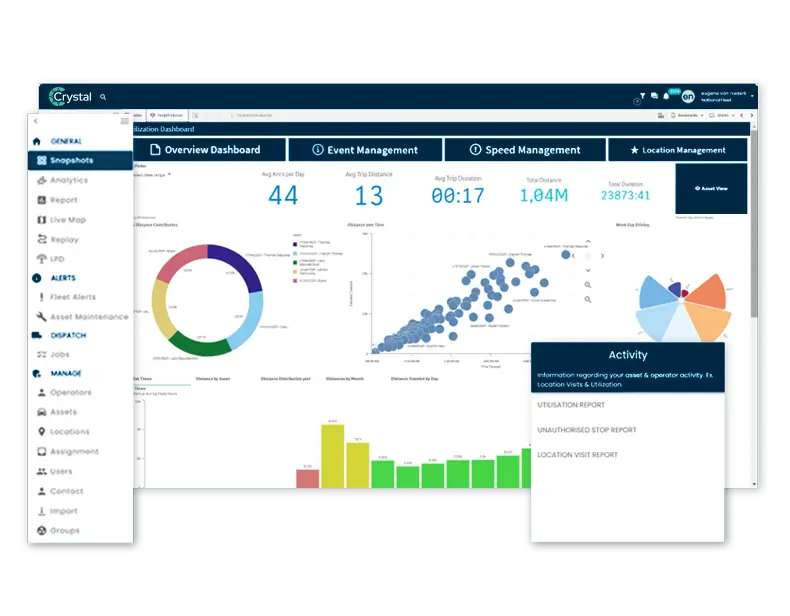
How it works.
Three steps from raw fleet data to audit-ready emissions reports. No spreadsheets, no manual emission factor lookups, no formula errors.
Connect fuel and GPS data
Your existing Ctrack telematics and fuel card data flows into the emissions module automatically. Diesel, petrol, LPG, and CNG are all supported. GPS data links fuel consumption to specific vehicles, sites, and routes.
Automatic carbon calculations
The platform applies current NGA emission factors to every fuel transaction. GHG emissions are calculated in CO2 equivalent and allocated by asset, site, and reporting period. Rate changes are applied automatically when the Australian Government updates emission factors.
Generate compliance reports
Download emissions reports formatted for NGER submission, AASB S2 disclosure, or internal sustainability reviews. Reports include full audit trails with source data, calculation methodology, and emission factors applied.
Built for the Australian compliance frameworks you face.
Ctrack supports the reporting standards that Australian fleet operators face today and the frameworks coming into effect in 2025 and beyond.
National Greenhouse and Energy Reporting
Annual reporting for corporations meeting emission thresholds (50,000+ tonnes CO2-e corporate, 25,000+ facility). Covers Scope 1 fuel combustion emissions from fleet operations.
Australian Sustainability Reporting Standards
AASB S2 climate disclosures require reporting of Scope 1, Scope 2, and Scope 3 greenhouse gas emissions. Large entities must disclose from 2025. Fleet operations are a primary contributor to Scope 1 totals.
Scope 3 and supply chain emissions
For organisations with transport in their value chain, Ctrack provides the vehicle emissions data needed for Scope 3 GHG reporting. Track the environmental impact of fleet operations across your supply chain partners.
Related fleet fuel solutions
Emissions reporting works alongside Ctrack fuel management and fuel tax credit tools. Reduce costs and carbon together.
Fuel Cost Management
Spend insights, anomaly detection, and supplier optimisation. Identify where your fleet burns the most fuel and take action to reduce both cost and carbon.
Fuel Tax Credits
Automated FTC claims with GPS off-road analysis, auxiliary fuel tracking, and ATO-ready reports. Recover more credits from the same fuel data used for emissions reporting.
The Ctrack Advantage
One platform. Three pillars. Complete fleet intelligence.
Predict
Foresight that keeps your fleet moving. Anticipate maintenance, optimise routes, and reduce emissions before problems arise.
Protect
AI-powered safety without surveillance. Real-time fatigue detection, driver coaching, and claims exoneration.
Comply
Built-in compliance that scales. Emissions reporting, CoR records, audit-ready reports, and continuous regulatory alignment.
Fleet emissions reporting questions answered.
Answers for finance teams, compliance managers, and fleet operators navigating Australian emissions reporting requirements.
Start with your biggest priority. Then expand into analytics, safety, and compliance as you grow.
Start tracking fleet emissions today.
Your fleet data is already in Ctrack. Emissions reporting turns that data into compliance reports and reduction insights without adding new processes or hardware. See how it works for your operation.