
Real-time location and trip history
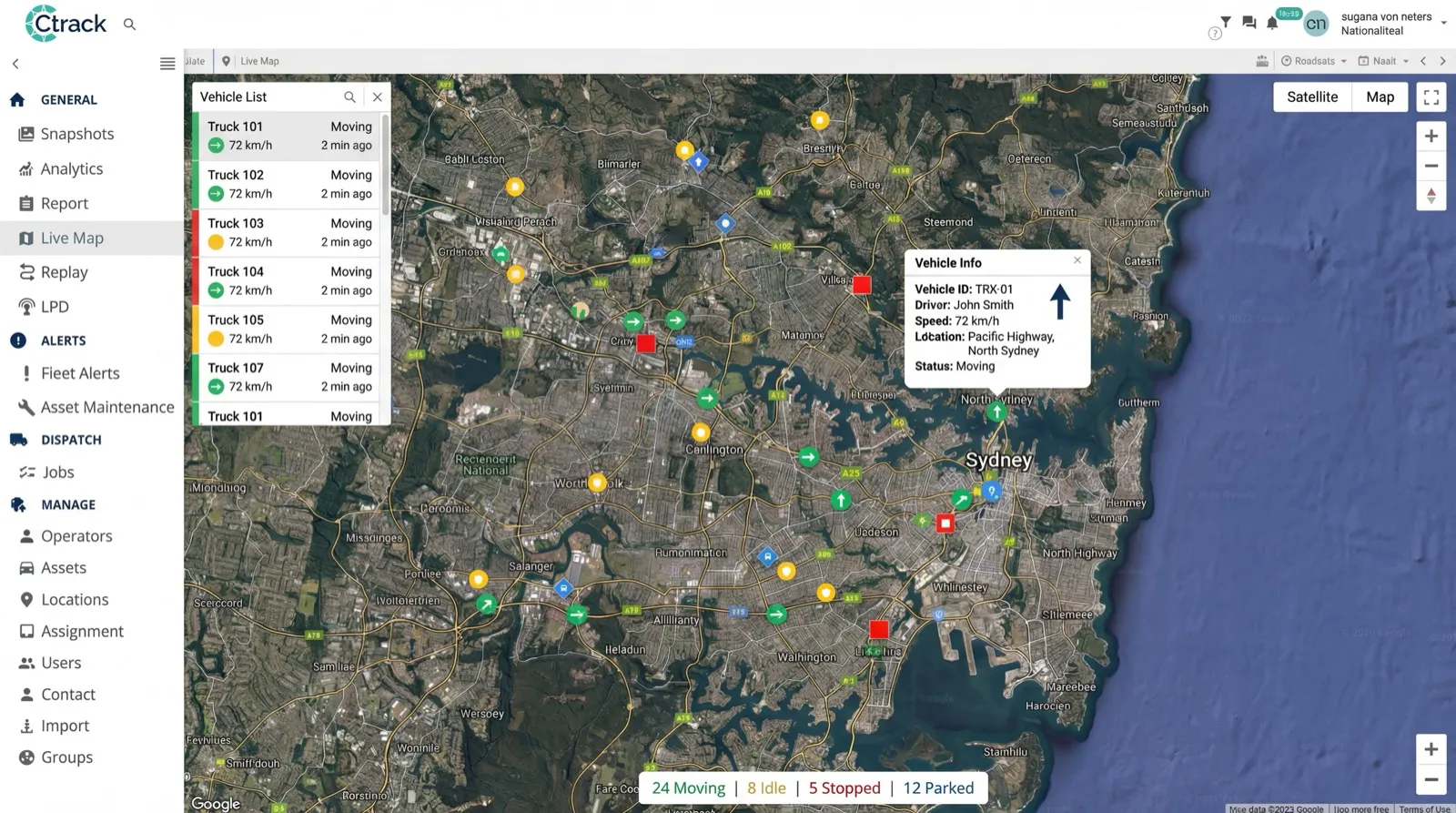
Live vehicle location updated every 10 to 60 seconds, route replay, geofences and ETA calculation across the entire fleet on one map. Most basic trackers stop at the dot; this does not.
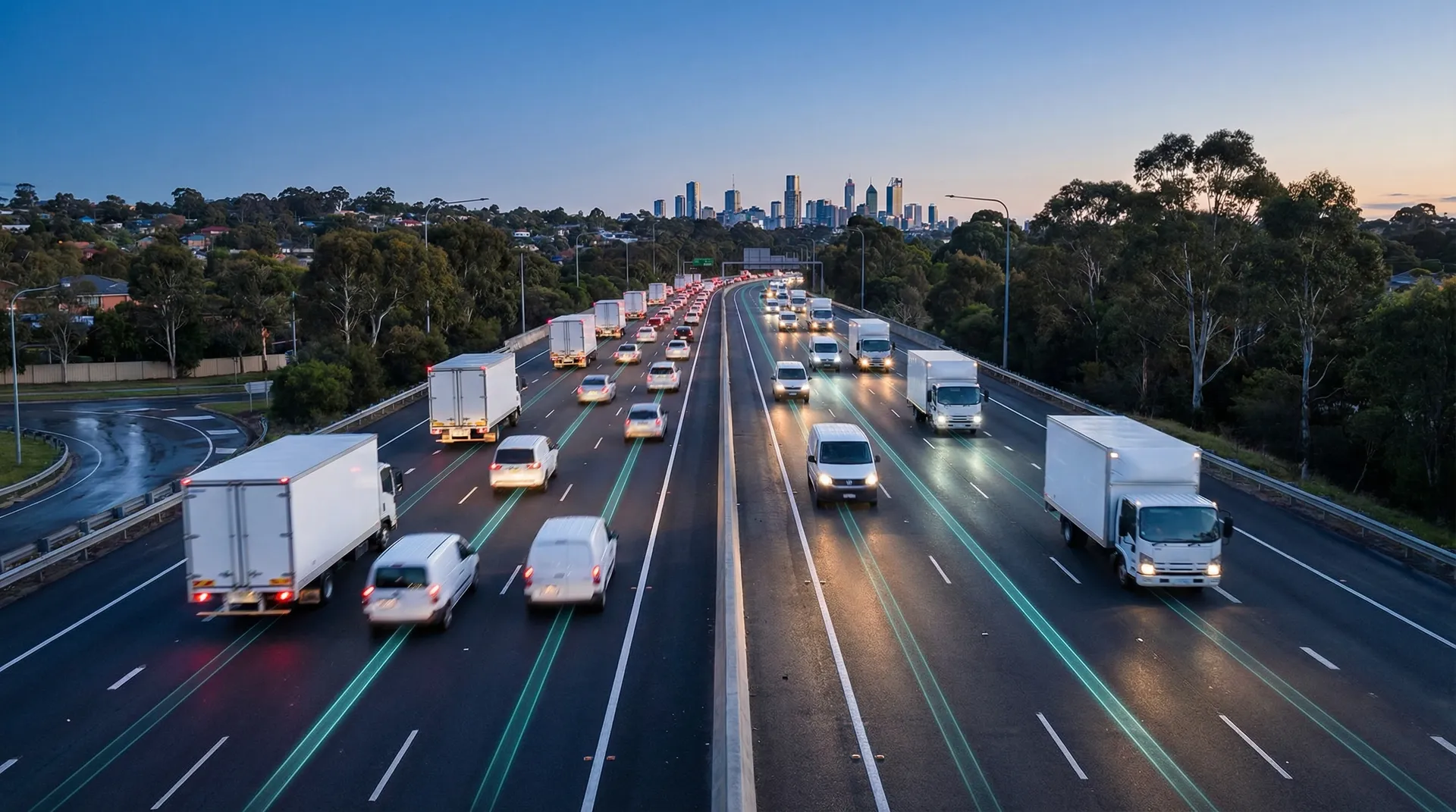
Stop running your fleet on guesswork. Ctrack fleet telematics turns every vehicle into a live source of truth: real-time GPS location, driver-behaviour scoring, fuel and idle, and engine diagnostics on one Crystal platform, so you cut costs and fix problems before they stop the job.
Trusted by leading Australian fleets




Review Ctrack fleet telematics with our Australian team and we will model the savings against your vehicle mix.
Telematics is the practice of pulling live data off every vehicle and turning it into decisions. A device on each vehicle reads location, ignition and movement, driver behaviour and, on the engine bus, fuel and fault data, then streams it to a central tracking system you watch in real time. The use of telematics has moved from optional visibility to standard operating practice, and managing a fleet without it leaves managers without real-time operating data.
That is the line between telematics and a basic tracker. A tracker reports location only. A comprehensive telematics solution adds driver-behaviour scoring, fuel and idle, vehicle diagnostics, geofences and exception reports, so you see not just where a vehicle is but whether it is about to fault, who is driving it hard, and what the trip cost. The history of telematics runs from simple location tracking to today's connected vehicle technology, and the next step ties driver and vehicle data to AI video on one screen. It sits under the wider Ctrack fleet management software, alongside fleet tracking for pure visibility and vehicle tracking for cars, vans and trucks (linked below).
The best telematics products do three things well: capture clean data, surface only what needs action, and feed the rest of the business. A complete telematics solution covers cars, vans and trucks across a mixed operation. An AfMA and ACA Research benchmark puts active use at 49% of large fleets of 250 or more vehicles, so this is the system to adopt rather than evaluate.
We frame the cost against the savings it recovers, not as a line item. Once idle, harsh driving and routing become visible, you can attack the waste directly: EROAD puts non-productive idling at 7 percent of fuel consumption alone, so across 100 vehicles at roughly $6,000 of fuel each that idle is near $42,000 a year sitting at the kerb. The same visibility cuts the admin hours that drain productivity and the insurance exposure that follows risky driving.
The downside of waiting is just as concrete. Vehicle downtime runs an industry benchmark of $700 to $1,180 per vehicle per day, so every hour off the road bleeds money that exception alerts and engine diagnostics are built to protect. Better data lifts efficiency across daily operations, so you optimise routing, utilisation and upkeep in one move. We build the savings model from your own baseline KPIs in the demo, so you see the payback before you commit, not a borrowed number.
Use these figures to frame a pilot and validate cost savings against your own baseline. They are industry benchmarks, not a Ctrack guarantee.
The technology is three parts: an in-vehicle device, a network, and the Crystal platform. We fit a telematics device to each vehicle, a hardwired IVMS unit for vehicles or a battery-powered unit of tracking equipment for trailers and non-powered plant, and it captures location, ignition, driver-behaviour signals and, on the CAN bus, engine and fuel data. That is live tracking with the engine data a basic tracker never sees.
The device streams that data to Crystal automatically over the mobile network. Offline buffering keeps it recording in remote and low-coverage areas and uploads the backlog once a connection returns, so an outback run is never a blind spot. Crystal then converts the raw signals into a live map, trip replay, driver scorecards, geofence and exception alerts, and scheduled reports. You set the thresholds for idle, speeding, geofence breach or service-due, and act on the alert before downtime or a claim compounds. This is how telematics helps a thinly staffed team watch the whole operation and its management at once.
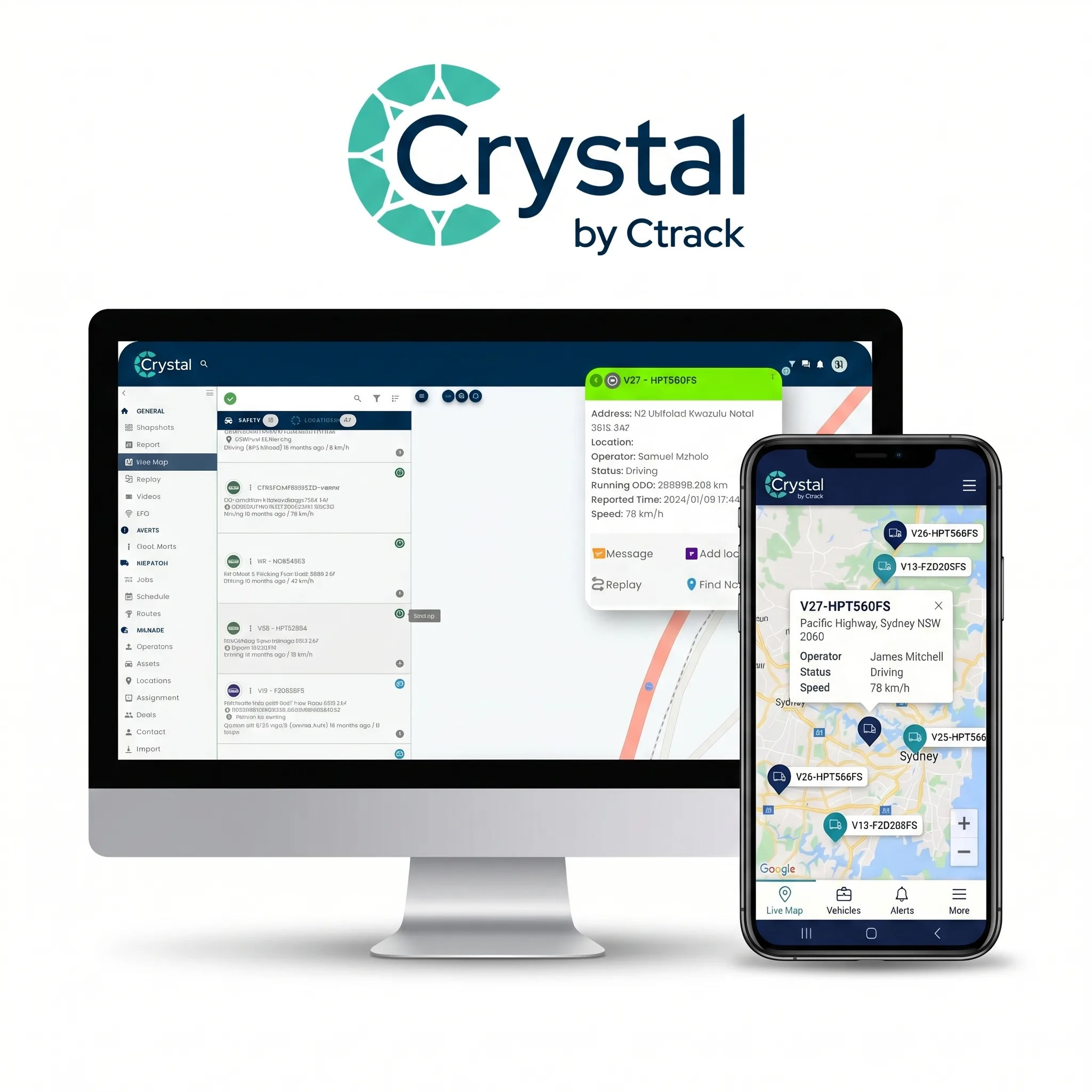
One Crystal system, one login, every vehicle. Unlike point telematics platforms that handle a single job, the software pulls GPS tracking, driver behaviour and engine diagnostics into the same screen, with the alerting and reporting your operations team needs built in, not bolted on. It gives fleet managers a single source of truth for vehicle management, the mobile app puts the same view in the field, and devices are TCA Type-Approved for Australian regulatory use.
Live vehicle location updated every 10 to 60 seconds, route replay, geofences and ETA calculation across the entire fleet on one map. Most basic trackers stop at the dot; this does not.
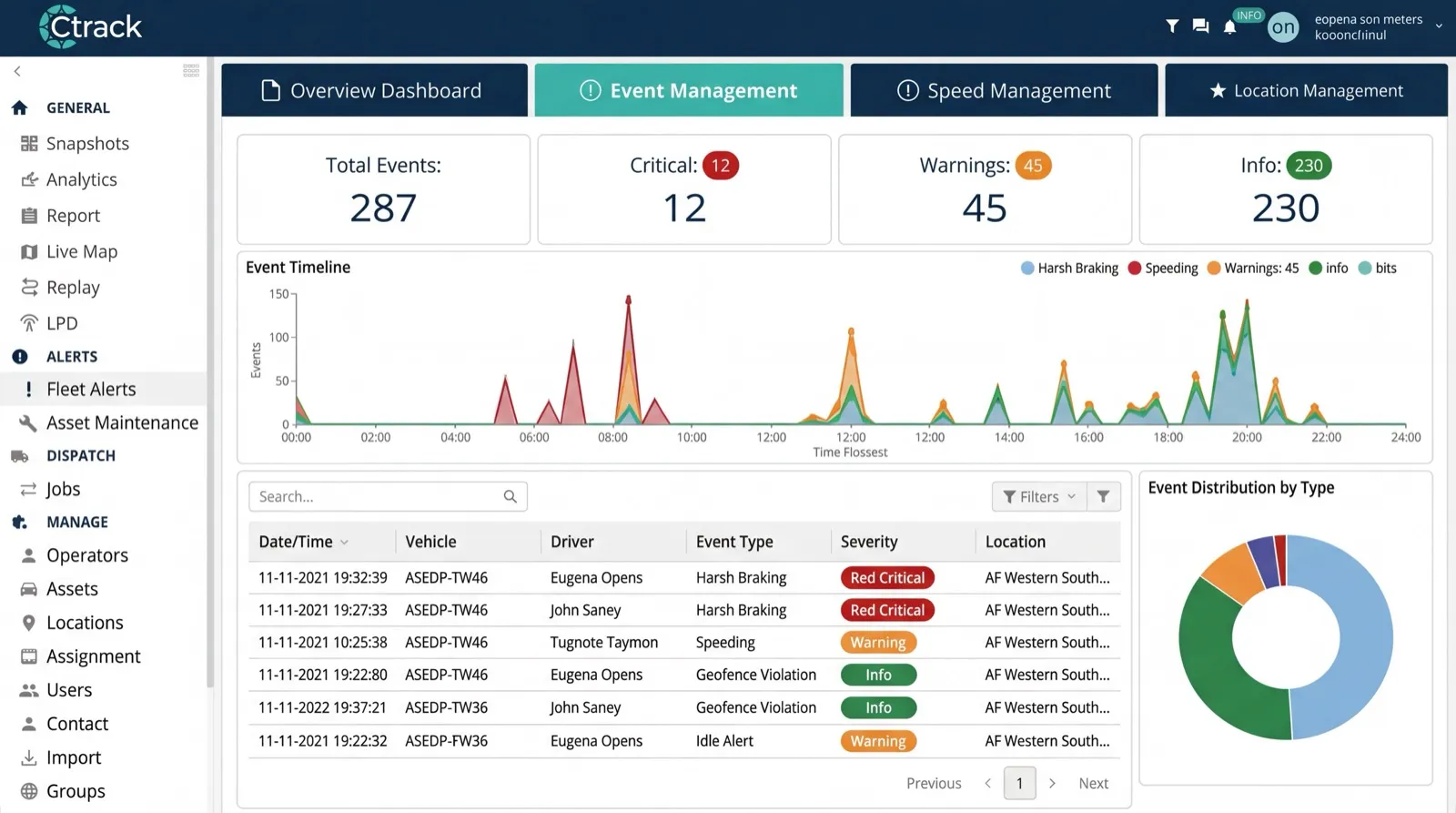
Speeding, each harsh brake or rapid throttle event and idle time become driver scorecards that expose risky driving habits and lift driver safety. Tracking driver patterns this way matters on a heavy truck: fatigue contributes to roughly 20 percent of all heavy-vehicle accidents (NHVR), and the data helps fleet managers coach before a claim, so behaviour scoring is a duty-of-care lever.
Fuel and idle reporting plus CAN-bus engine and fault signals track vehicle performance and feed usage-based service scheduling, so servicing happens on real engine hours and vehicle use, not a guess.
Set thresholds for idle, speed, geofence breach or service-due and get instant alerts that flag only what needs a decision, without overwhelming operations teams with low-value alerts.
Around 30 bundled reports, from utilisation and idle exception to speed violation and trip summary, with automated exports and a centralised KPI dashboard.
Crystal serves fleet managers and drivers from the Crystal Mobile App, on the same system as AI video, asset tracking and regulatory reporting, so the operation scales without a rip-and-replace.
The data is only worth collecting if the rest of the business can use it. Crystal connects through an open API and standard integrations, so vehicle and driver performance data flows into the ERP, fuel-card, maintenance and BI systems you already run, including Power BI and Tableau. This is where telematics and GPS fleet tracking deliver measurable operational value: operations, finance and compliance work from one source of truth instead of a fourteenth login the team ignores. As your provider, Ctrack will help fleet managers wire it in.
The same trip and driver records become audit-ready evidence. Chain of Responsibility and HVNL reporting, EWD integration with NHVR-approved providers, fuel tax credit recovery and FBT logbook are all live Australian modules. You set role-based access, retention and audit trails, and the fleet management system grows from telematics into fleet analytics as the operation matures.
What the data covers, how it performs in the bush, what it connects to, and what it costs to run an IVMS across the fleet.
Related fleet solutions
The system runs on the same Crystal platform as the rest of your operation. Start with the data, then expand as the business grows.
The hub that telematics, video and analytics run on, one login for the whole operation.
Pure GPS visibility: live location and trip history when you need the map, not the full data stack.
Tracking for cars, vans, utes and trucks in one system, with the device matched to each vehicle.
Turn telematics data into KPI dashboards and trend reporting once the basics are running.
Book a personalised demo and we will model the fuel, admin and downtime savings against your own baseline KPIs, with no obligation.