ADAS for Australian fleets
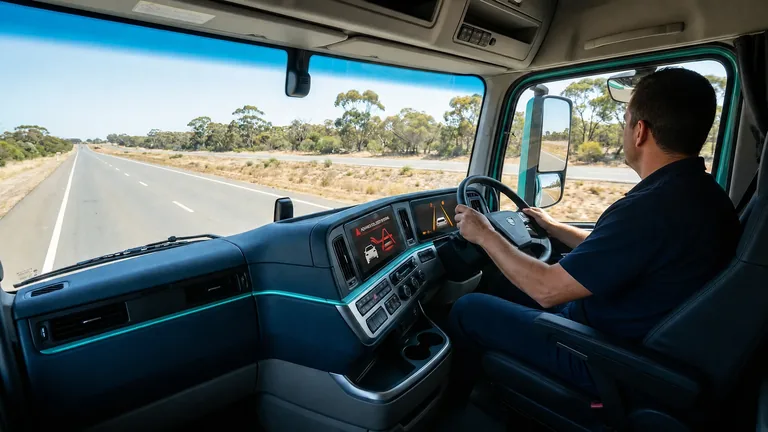
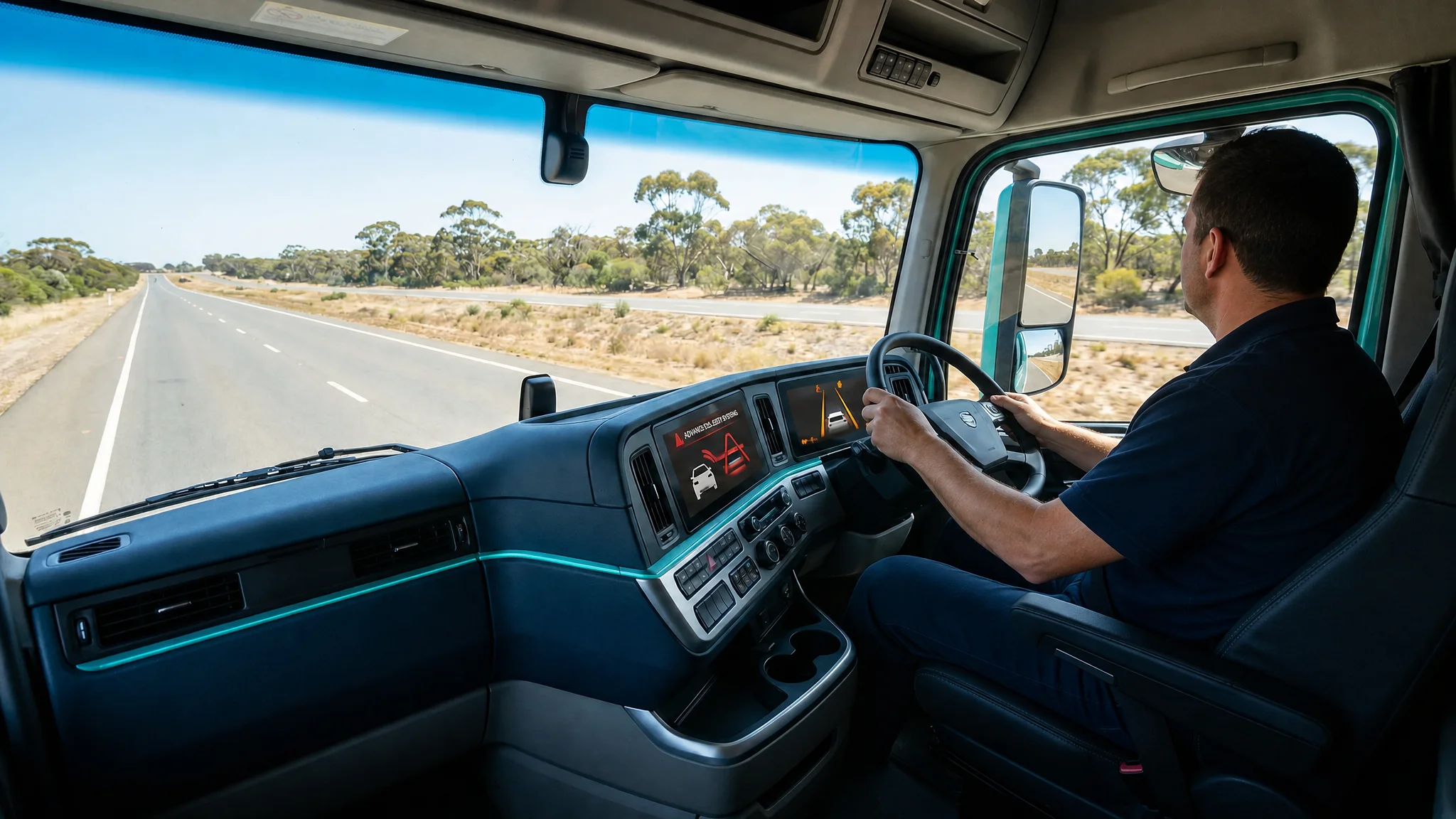
Crystal Vision is the road-facing half of our safety platform: an AI camera that reads the road ahead and warns your driver the moment a crash is forming. Rear-end, drift, headway and proximity alerts fire in the cab while there is still time to react.
Trusted by leading Australian fleets





Warn the driver before the crash forms
- Forward collision warning: an in-cab alert fires when closing distance gets dangerous, giving the driver time to brake.
- Lane departure warning: detect an unindicated lane drift early, the first sign of a tired or distracted driver.
- Blind-spot and pedestrian alerts: flag cyclists and pedestrians in the path before a low-speed strike on site or in town.
- Fits your whole mixed fleet: a retrofit AI camera for older trucks and light commercials with no factory safety technology.
- Australian-hosted evidence: every event lands risk-classified in a searchable library for coaching and claims.
- One Crystal platform: road-facing ADAS and the driver-facing DMS share one login and one evidence library.
Book a Demo
Review Crystal Vision ADAS in a personalised demo to see how road-facing warnings and Australian-hosted evidence cut collision risk across your fleet.
Fleet Safety Risks Without Advanced Driver Assistance Systems
When the person at the wheel gets no real-time signal that a crash is forming, reaction time is the first thing to go. Crystal Vision ADAS reads the road ahead and warns the driver in the cab: rear-end, drift, headway and proximity alerts that fire while there is still time to brake or correct. As an industry benchmark, NTI and NTARC attribute 63.5% of serious truck crashes to human factors such as inattention, following distance and inappropriate speed, which is exactly what an early alert targets, and that is the road safety gap this safety technology closes.
Collision risk exposure
Without an early road-ahead signal and headway tracking, drivers react too late when traffic slows suddenly or an obstacle appears. The rear-end cue targets the shunt that is the most common fleet incident type.
No early sign of a tiring driver
An unindicated drift is often the first road-facing sign that someone at the wheel is tired or distracted. The drift warning flags it on the road side, and the driver-facing DMS layer reads fatigue and distraction in the cab on the same platform.
No proactive warning at all
Without drift, side-zone and proximity alerts, the operator misses the critical signal until the moment of impact. The cue needs to fire before the incident, not record it after.
ADAS Safety Features for Vehicles on Australian Roads
Crystal Vision ADAS reads the road ahead with a road-facing AI camera and warns the operator the moment risk appears. These collision avoidance systems run road-facing detections: rear-end alerts, lane drift, headway and tailgating, blind spot, pedestrian and cyclist proximity, and traffic sign recognition. Each driver alert fires in the cab in real time, giving the operator the extra seconds to brake or correct, across every vehicle in your fleet.
The camera reads closing distance to the vehicle ahead and warns the cab before an imminent rear-end, giving time to brake.
Warns when the vehicle drifts across the line without indicating, an early sign of a run-off-road incident.
Flags pedestrians and cyclists in the vehicle path and triggers an immediate in-cab cue, the risk that bites in town and on site.
Monitors the gap to the vehicle ahead and prompts the cab when the following distance gets unsafe for the current speed.
Reads posted signs such as speed limits and prompts the operator, useful on changing limits and roadwork zones.
Warns of a vehicle or vulnerable road user alongside before a turn or merge, a common cause of side-swipes.
ADAS Fleet Technology Workflow
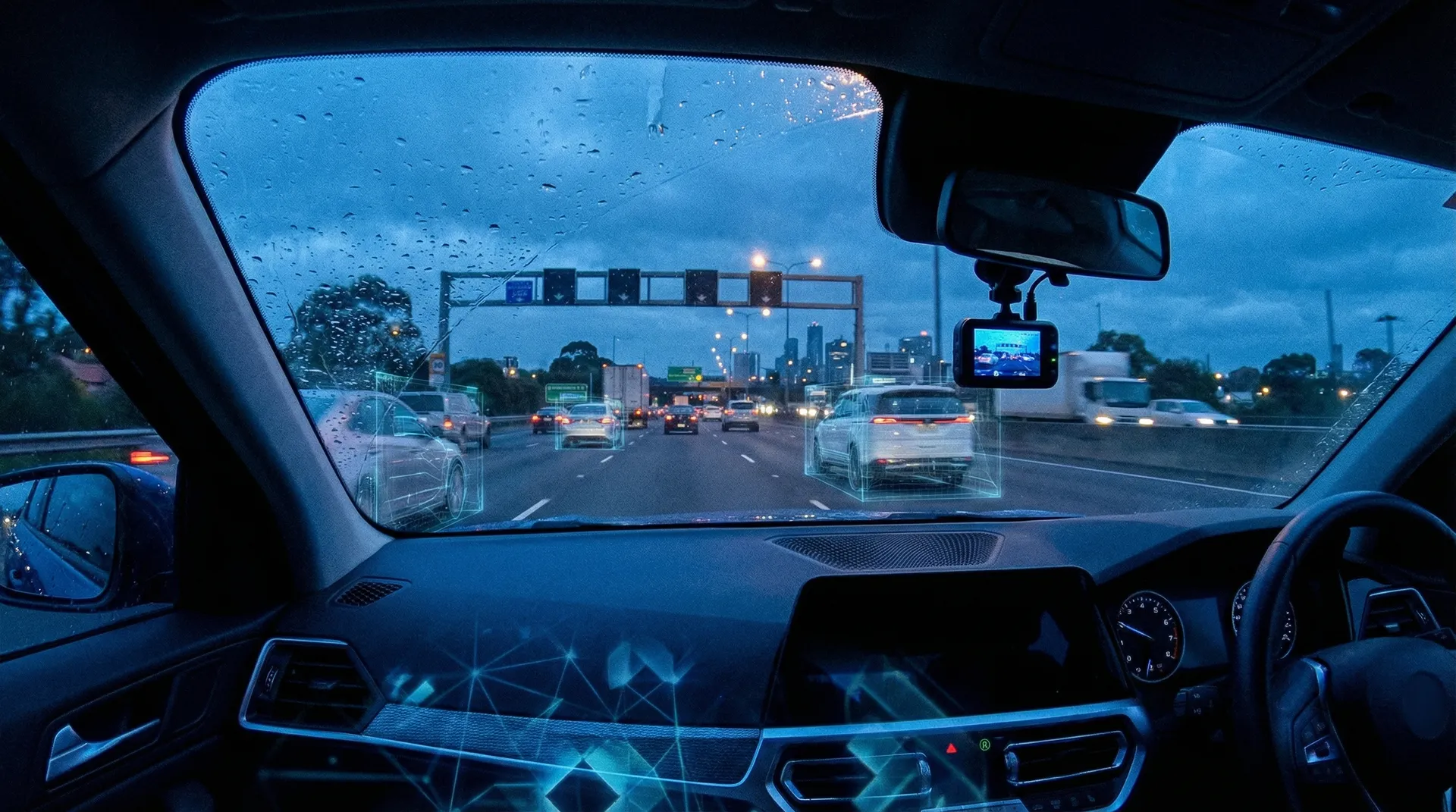
Advanced driver assistance systems combine road-facing cameras, AI processing, and real-time alerts to prevent collisions before they happen. ADAS cameras read the road and AI scores the risk, then the unit alerts the driver in the cab, which is how these ADAS systems improve safety outcomes across your fleet operations and give fleet managers a clear view of where risk sits.
Camera analysis
Road-facing cameras continuously analyse road conditions, vehicle distance, lane position, and potential hazards. The ADAS unit mounts to the windshield with a clear view of the road.
AI risk detection
Machine learning algorithms process video feeds in real time to identify impact risk, an unindicated drift, and vulnerable road user presence. Processing happens at the edge for zero-latency response.
Instant warnings
When risk is detected, audio-visual warnings trigger in-cab immediately. Events sync to the Ctrack platform for review, reporting, and coaching workflows.
ADAS Calibration, Camera Placement and Installation
Professional installation and per-vehicle calibration keep the alerts accurate across your fleet. Every camera is calibrated for the vehicle type, so rear-end and drift alerts fire at the right thresholds for the speeds and roads it runs. Ongoing alert handling is built in: if a driver keeps ignoring prompts, notifications escalate to the fleet manager.
- Windshield-mounted cameras with a clear road-ahead view for maximum detection range.
- Professional calibration for vehicle height, camera angle, and speed parameters.
- Trigger thresholds tuned per route to balance useful prompts against alert fatigue from excessive in-cab warnings.
- Nationwide installation network with local technicians right across the country.
Forward Collision Warning Safety Case
A road-facing camera does two jobs: it warns the driver in time to avoid the crash, and when a crash is not their fault, the footage helps exonerate the driver. The figures below are local industry benchmarks that frame the risk and the upside. They are not Ctrack results, and your own outcome depends on your fleet, routes and how you coach the events.
Footage that clears your driver
NTI's 2025 NTARC report found that truck drivers are not at fault in 85.7% of fatal truck-and-car crashes. When the incident is not your operator's doing, an event-based road camera is what supports the claim. Every triggered event lands risk-classified in a searchable, time-stamped library hosted onshore, so the same device that flagged the risk also defends a Chain of Responsibility audit and an insurance dispute.
- Event-based capture, not a continuous recording of your drivers.
- Each clip carries GPS, speed and a High, Medium or Low risk class.
- Data hosted onshore on a TCA Type-Approved platform.
ADAS Use Cases: Safety and Convenience by Industry
Road-facing ADAS technologies deliver the most value wherever crash risk runs highest: long-haul highways, busy urban delivery runs, active construction sites and remote haul roads. Crystal Vision retrofits to your existing trucks and light commercials, so you advance protection across the whole mixed fleet, not just the newest vehicles, and pair the rollout with driver education so the team trusts the alerts.

Transport & logistics
Rear-end and drift cues for long-haul drivers on highways and regional roads.

Construction
Pedestrian detection and impact avoidance for heavy vehicles operating near workers on active sites.

Mining
Headway and drift cues for vehicles operating on remote haul roads and access tracks.
Lane Departure Warning and the Australian Safety Case
The safety case for road-facing alerts is a local one. Safe Work Australia reports that vehicle incidents caused 42% of the country's worker fatalities in 2024, the single largest cause. On the road itself, NTI and NTARC, the country's largest heavy-vehicle insurer, attribute 63.5% of serious truck crashes to human factors: inattention, fatigue, inappropriate speed and following distance. Those are the moments an in-cab cue is built to interrupt.
Regulation is moving the same way, in step with the national road safety strategy. The Australian Design Rules progressively mandate factory functions on new vehicles, such as systems that actively brake, steer or control the vehicle. Those are built by the vehicle manufacturer under the ADRs and are not functions Ctrack provides. They also only reach your fleet as you buy new, so adoption stays slow across an older mixed fleet. Crystal Vision is the aftermarket route, and it warns rather than controls: a road-facing AI camera that pairs with your existing telematics and adds rear-end and drift alerts to the trucks and light commercials you already run, regardless of make, model or age. The gaps in an older mixed fleet are exactly where a retrofit warning camera helps drivers most.
The road-facing camera covers the road; the cab-facing DMS layer covers fatigue and distraction. Fatigue contributes to around 20% of heavy-vehicle accidents in Australia (NHVR), which is why the two layers run as one system on the Crystal platform rather than as two separate bolt-ons. One system, not two, is what lets a fleet manager advance the whole programme from a single view.
The local numbers that frame a pilot
- Vehicle incidents caused 42% of the country's worker fatalities in 2024, more than triple the next-leading cause (Safe Work Australia). Industry benchmark.
- 63.5% of serious truck crashes are caused by human factors such as inattention and following distance (NTI / NTARC). Industry benchmark.
- Fatigue contributes to around 20% of heavy-vehicle accidents in Australia (NHVR), the gap the driver-facing DMS layer is built to close. Industry benchmark.
ADAS sits across two of the pillars our platform is built on, and the two advance together: keeping every driver home safe, and limiting your exposure when something goes wrong.
Safety: get every driver home safe
Rear-end, drift, headway and proximity alerts fire in the cab while there is still time to react, so a near-miss stays a near-miss. Each event becomes a coachable moment, not just a recorded one.
Risk: limit exposure, prove what happened
Event-based, risk-classified footage with GPS and speed, hosted onshore on a TCA Type-Approved platform. It stands up in a Chain of Responsibility audit and an insurance dispute, and clears your driver when they are not at fault.
ADAS features that warn the driver in time
Crystal Vision reads the road ahead and the cab at once, turning early warnings into coachable events in the evidence library.
Lane Departure Warning
Road-facing AI warns the cab when the vehicle drifts across the line without indicating, an early sign of fatigue or distraction. This is the LDW layer of the system: each event is logged and risk-classified in Crystal for review and coaching, and feeds your fleet management reporting.
Live Streaming from the Cab
Stream live road and cabin video from the cab on demand over 4G from the Crystal Vision recorder, so you can check a scene in real time during an incident, a welfare check or a dispute without waiting for an upload.
Forward Collision Warning
The road-ahead cue and headway tracking warn the cab of closing distance and an imminent rear-end, giving time to brake. Triggered clips pair with the evidence library so managers can coach the pattern, not just the moment.
ADAS Fleet Questions Answered
Practical answers for safety managers, operations teams, and procurement decision makers.
Road-facing ADAS is one layer. Pair it with the driver-facing side and the wider video evidence picture on the same Crystal platform.
The driver-facing DMS layer: fatigue and distraction detection in the cab, on the same platform.
The connected camera that captures and uploads the road and cabin footage behind every event.
Footage tied to GPS, speed and events in one evidence library for coaching and claims.
The Crystal Vision hardware that runs the road-facing detections, professionally installed and calibrated.
Run a structured pilot on your highest-risk routes. Measure incident rates, driver response times and safety improvements against your baseline, with an Australian team who installs and calibrates per vehicle.