
No live answer for dispatch
Dispatch falls back on phone calls to find out where a van is and when it will arrive. There is no reliable read on speed, movement or arrival time, so customer ETAs are a guess and the office chases updates all day.
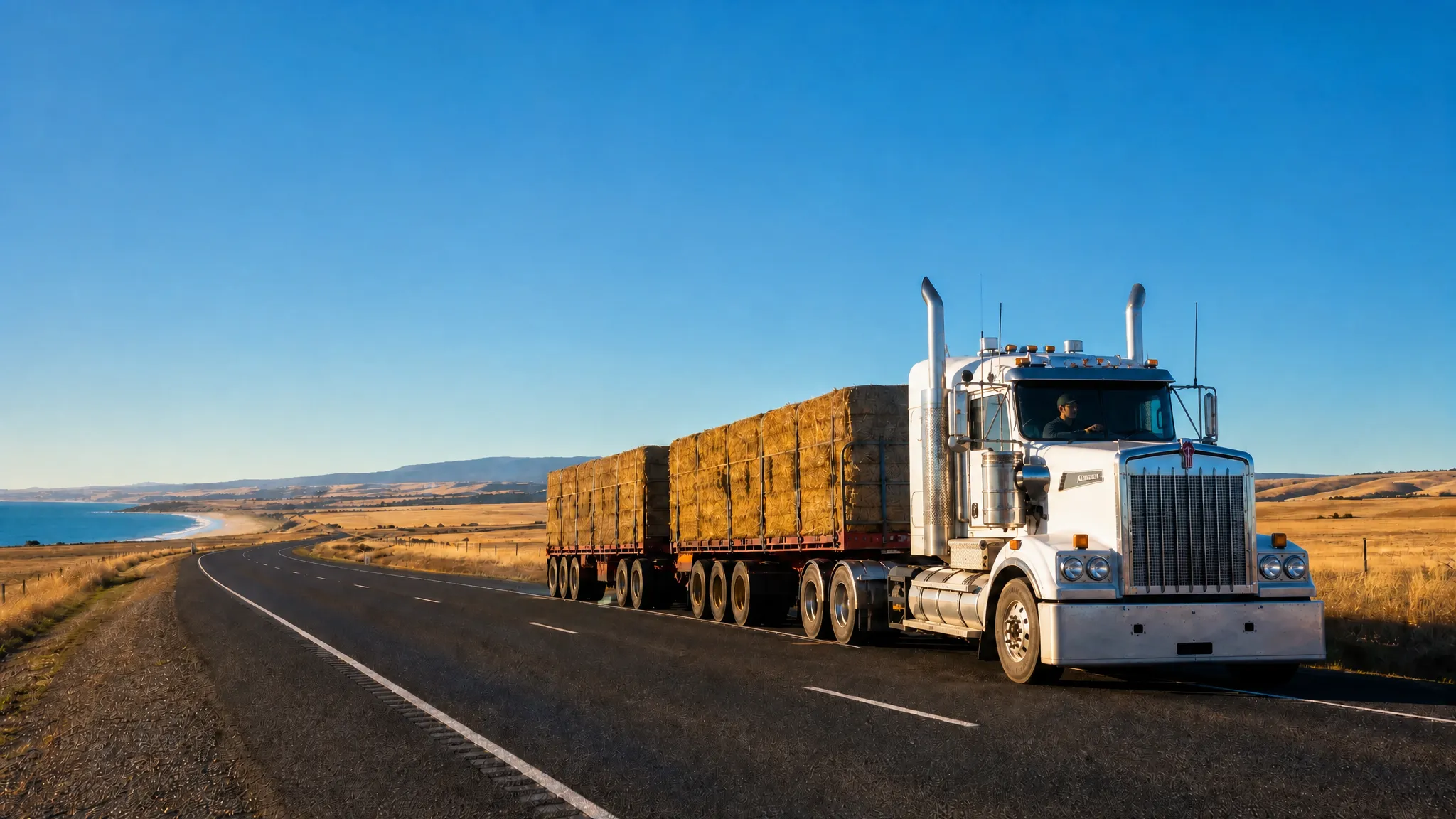
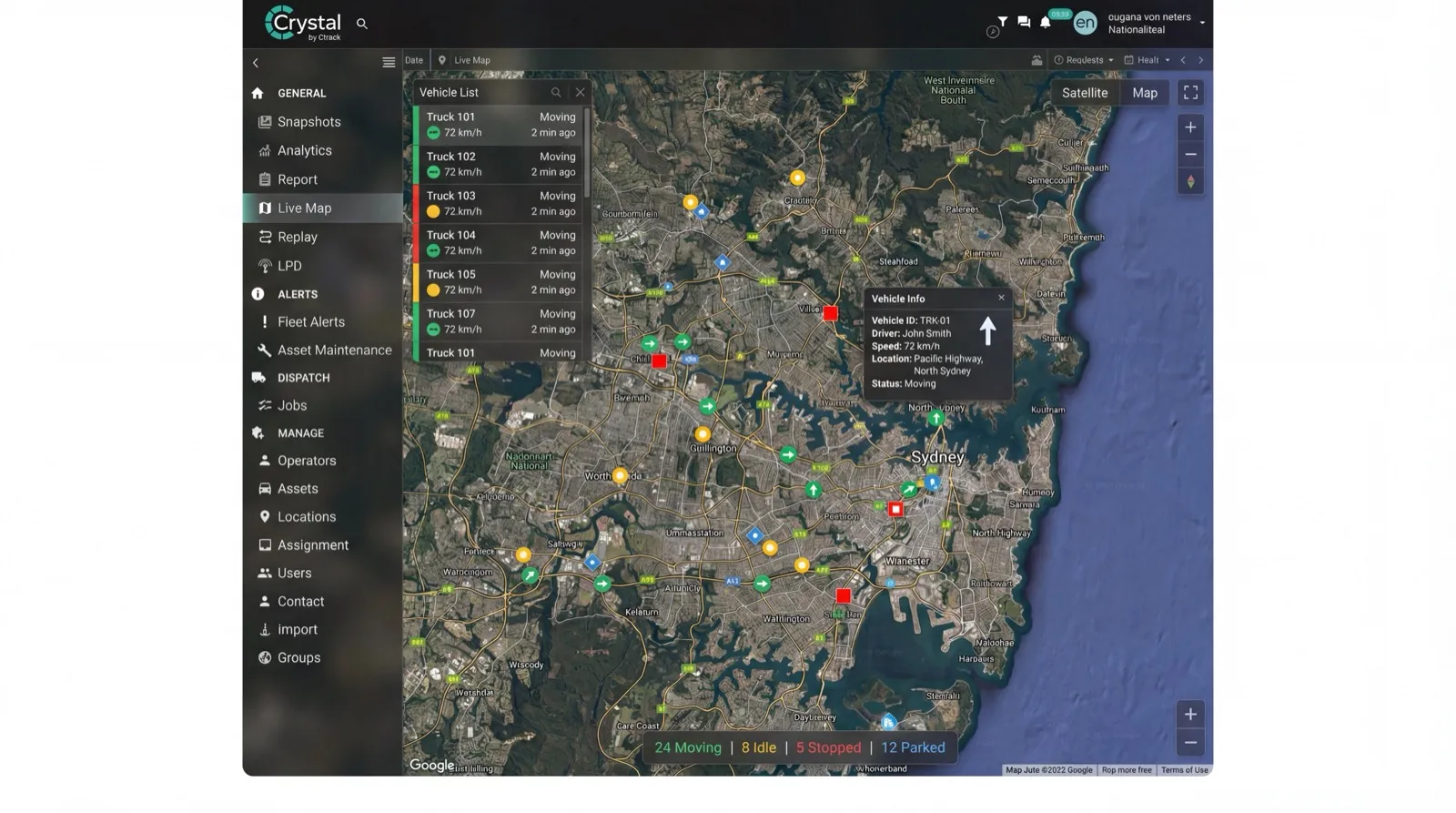
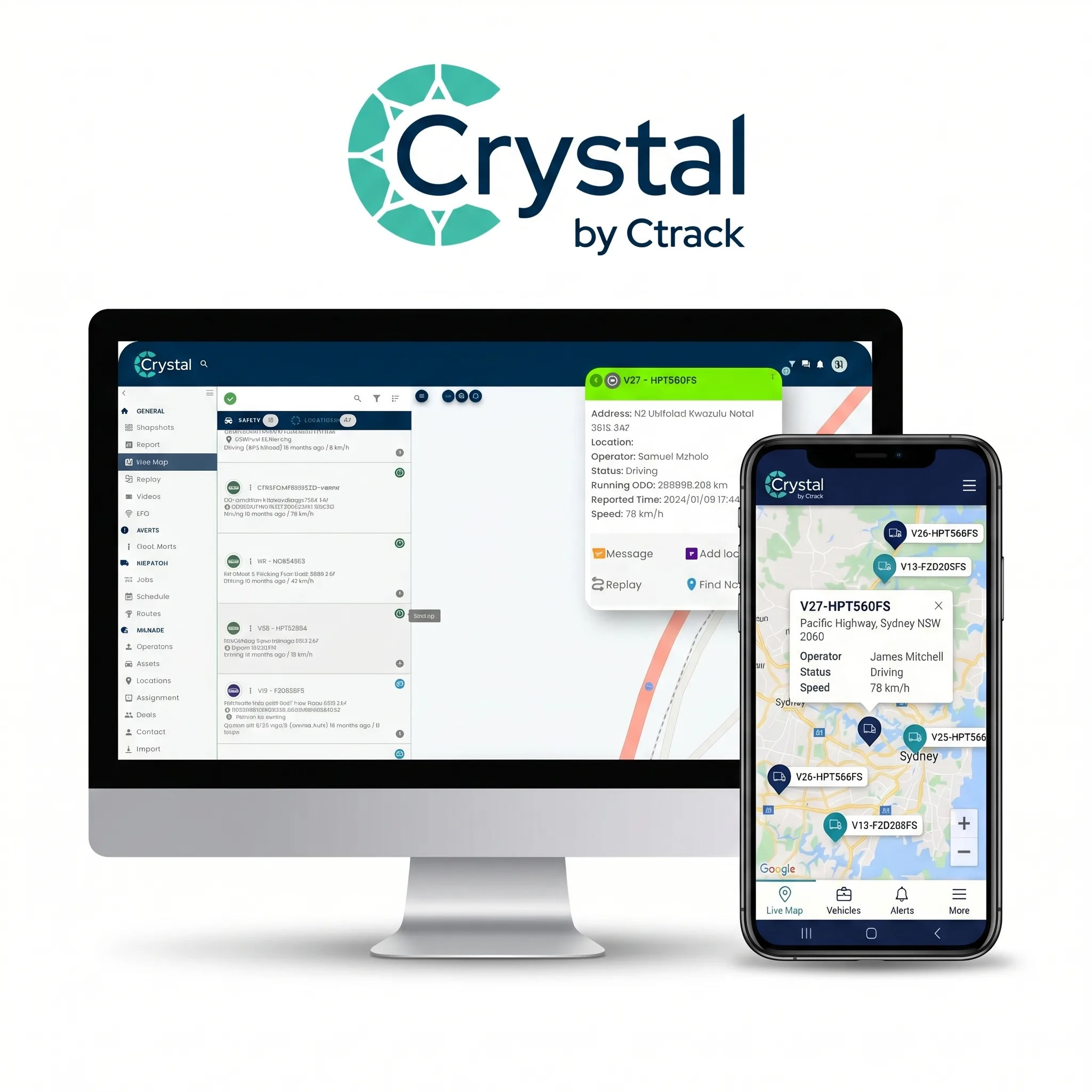
Ctrack vehicle tracking puts every car, van and truck on one live Crystal map, so you always know where each vehicle is and when it will arrive.
Trusted by leading fleets nationwide






Review Ctrack vehicle GPS tracking in a personalised demo to see how Crystal solves your location, dispatch and recovery challenges, with an ROI projection for your fleet size.
Run a fleet without live location and three problems compound: nobody can answer "where is it?", theft turns into a write-off, and fuel and hours burn on the wrong route. The NMVTRC recorded more than 72,000 vehicle thefts in Australia in 2024, up from 55,000 in 2022, so exposure is rising, not falling.
Dispatch falls back on phone calls to find out where a van is and when it will arrive. There is no reliable read on speed, movement or arrival time, so customer ETAs are a guess and the office chases updates all day.
Without location evidence, a stolen van is rarely recovered. Industry benchmarks put recovery for monitored vehicles above 80%, against roughly 20% for unmonitored ones, and insurers price that gap straight into your premium.
With no trip history, you cannot see unverified stops, long detours or idle time. Route optimisation reduces fuel use through tighter routing and less idle time, and that saving is invisible until every trip is recorded in Crystal.
Vehicle tracking fits a hardwired tracking device to each car, van, ute or truck, reads its position from GPS satellites, and shows every vehicle on one live Crystal map. The vehicle tracking device captures location, speed and trip history automatically. You see where each one is, where it has been, and how it is being driven, without calling anyone.
It reads the same for a five-van trades business or a fleet of hundreds. Tracking trailers, plant or containers that move without a driver instead? That is asset tracking. The cars, vans, utes and trucks your drivers take out every day are the powered fleet on the road, all on one live map.
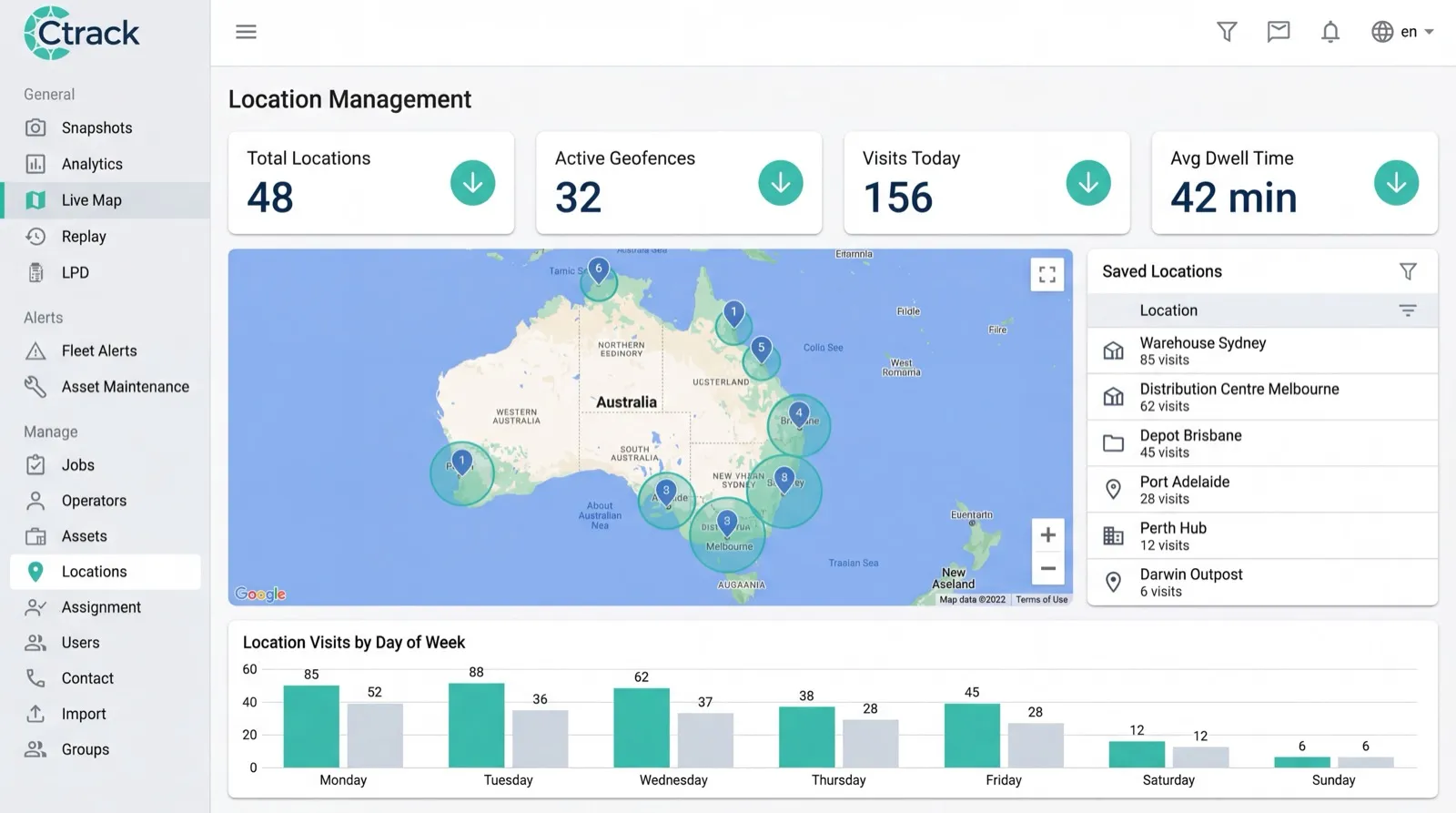
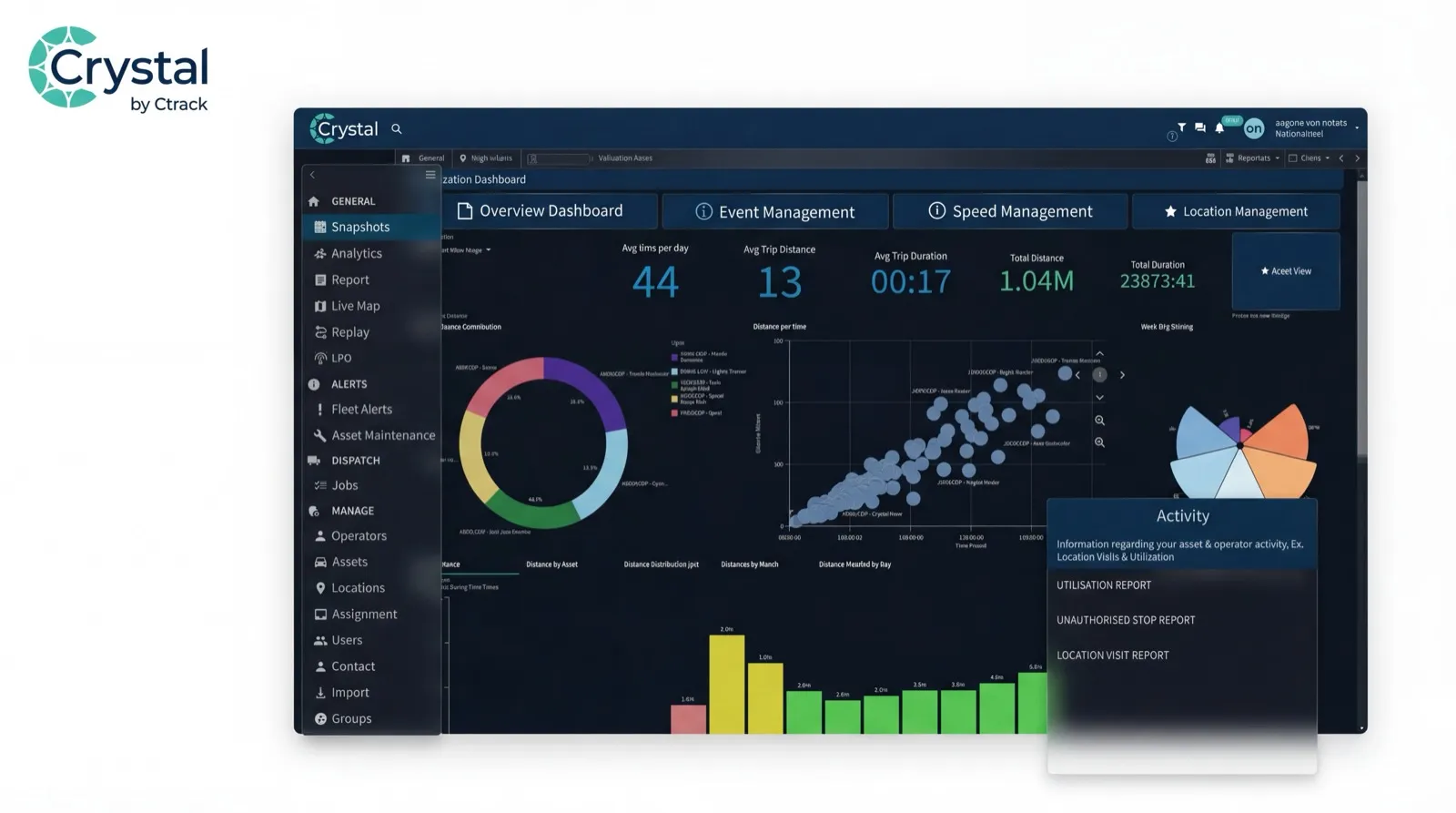
Crystal gives operations teams live position, trip replay, geofence alerts, device status and scheduled reports in one operational dashboard.
See each vehicle on a live map with speed, direction and movement status. Updates every 10 to 60 seconds give dispatch accurate ETAs without a single call to the driver.
Replay any route from complete records: stops, timestamps and speed. Confirm a driver was where the job sheet says, settle a dispute, and review time on site from the web portal or the app.
Draw zones around yards, depots, sites and customer locations, then get an alert the moment a vehicle enters or leaves. Thresholds are configurable per vehicle or driver group.
Ignition on and off, after-hours movement and speed exceptions are flagged automatically. Exception management surfaces the events that matter instead of a wall of raw data.
Each hardwired unit reports ignition state, battery and engine inputs over the CAN bus, and its offline-buffer status. Vehicle-health events flag a fault before it strands a driver.
Automated trip, utilisation and activity reports land on schedule, and ETA calculations feed dispatch. The data exports cleanly for payroll, billing and customer updates.
The setup is simple: a device, a network and the Crystal platform. A hardwired GPS tracker fixes its position from satellite signals, then the cellular network relays real-time location, speed and status to your dashboard, so you can track each vehicle as it moves. Offline buffering keeps recording where coverage drops and syncs the trip the moment it reconnects, so remote runs are never lost.
On a powered vehicle the same unit reads engine data over the CAN bus, so fault codes and run-hours sit beside location in one record. Fitting is tamper-resistant and configured before despatch. Device specs and fitting options are covered with the GPS tracker hardware.
Put a unit on every vehicle and the numbers move in your favour: less theft loss, less fuel and less admin, with payback measured in months, not years.
Crystal runs in any browser and on iOS and Android, so managers and drivers work from the same live map wherever they are. Check a vehicle, confirm an arrival or replay a run from the depot or the roadside, with live tracking in the mobile app.
One login covers monitoring, geofence events, reports and notifications, so your team acts on one connected view instead of chasing updates across separate tools.
Ctrack links Crystal location data to the systems your operation already runs, so a fleet manager works from one record and data flows once instead of being keyed in twice. Every tracking device feeds the same back office.
One account covers a mixed fleet. Car tracking, vans, utes and trucks all run on the same vehicle tracker and the same Crystal map.
Truck tracking follows each rig and prime mover between depots, jobs and delivery points, with location history that supports Chain of Responsibility evidence without separate log books.
Van tracking gives trades and service crews live arrival times on every run, and shows which van is closest when a job comes in. The driver app keeps each crew on the same page.
Keep oversight of salary-packaged and pool cars, with usage captured automatically for FBT and logbook records. Role-based access keeps personal-use rules clear.
The same location data that runs dispatch also keeps you compliant and protected. Trip history, driver hours and movement records give Chain of Responsibility audits exactly what they ask for, and driving behaviour insights help managers coach safer habits.
Monitoring business-owned vehicles is legal here with a clear workplace policy. Role-based access and configurable retention support Privacy Act obligations, and data sits in local data centres. If a vehicle is taken, the unit keeps reporting its position so your team can work with police on a fast, evidence-backed recovery.
Metro, regional or remote, one plan covers the whole country on national mobile coverage, offline buffering and local support.
Vehicle tracking connects to the wider Crystal platform. Review the related solutions that matter most to your operation.
The core platform that ties tracking, safety and compliance together. One login for the whole operation.
Live GPS visibility across every vehicle in the fleet, with routes, stops and exception alerts on one map.
Draw zones around sites and depots and get an alert the moment a vehicle enters or leaves the boundary.
Track trailers, plant and containers that move without a driver, on long-life battery units.
Fast recovery when a vehicle is taken. Timestamped location gives police and insurers a clear trail.
Hardwired units with CAN bus engine data, offline buffering and rugged industrial-grade enclosures.
Part of the Ctrack platform
Vehicle tracking runs on the same Crystal platform as the rest of your operation.
Ready to See Every Vehicle on One Live Map?
Book a personalised demo to see how Crystal solves your location, dispatch and recovery challenges, with an ROI projection for your fleet size.