
What Is GPS Tracking?
GPS tracking is the use of the Global Positioning System to determine and record the real-time location of a vehicle, asset, or person. A GPS tracking device installed in a vehicle communicates with orbiting satellites to calculate its precise position. That location data is then transmitted over cellular networks to a web-based platform, where fleet managers view live vehicle positions, trip history, and driver behaviour.
How It Works
How GPS Tracking Works
The Global Positioning System consists of over 30 satellites in orbit around Earth. When a GPS tracking device in your vehicle receives signals from at least four of these satellites simultaneously, it calculates its position to within a few metres. This happens continuously, with most commercial systems updating every 10 to 60 seconds.
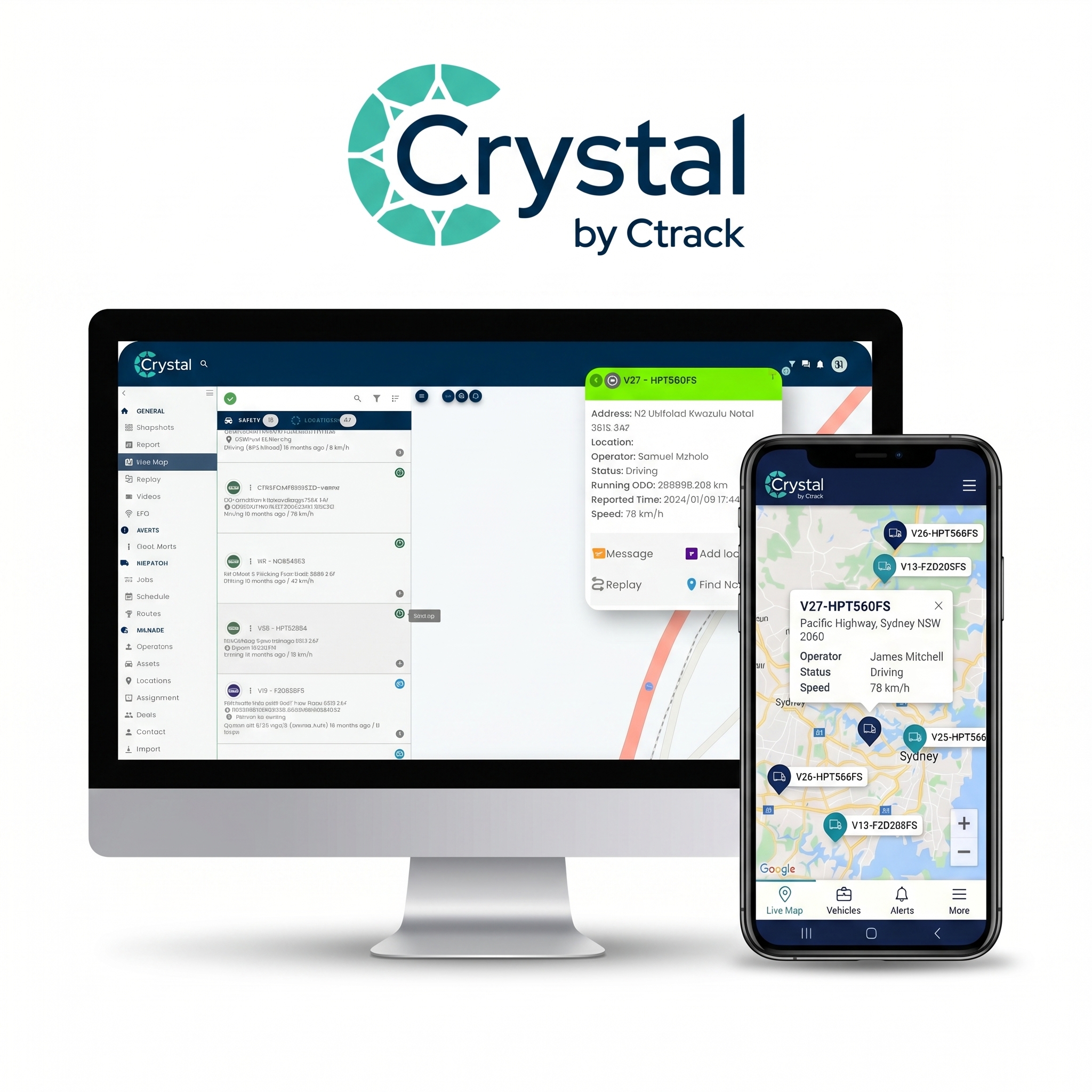
Once the device calculates its position, it transmits that location data over a cellular data network to a cloud-based fleet management platform. You log in and see every vehicle on a live map. You can check speed, direction, and status, replay any trip from the past months, or set geofence alerts when a vehicle leaves a depot or enters a restricted zone.
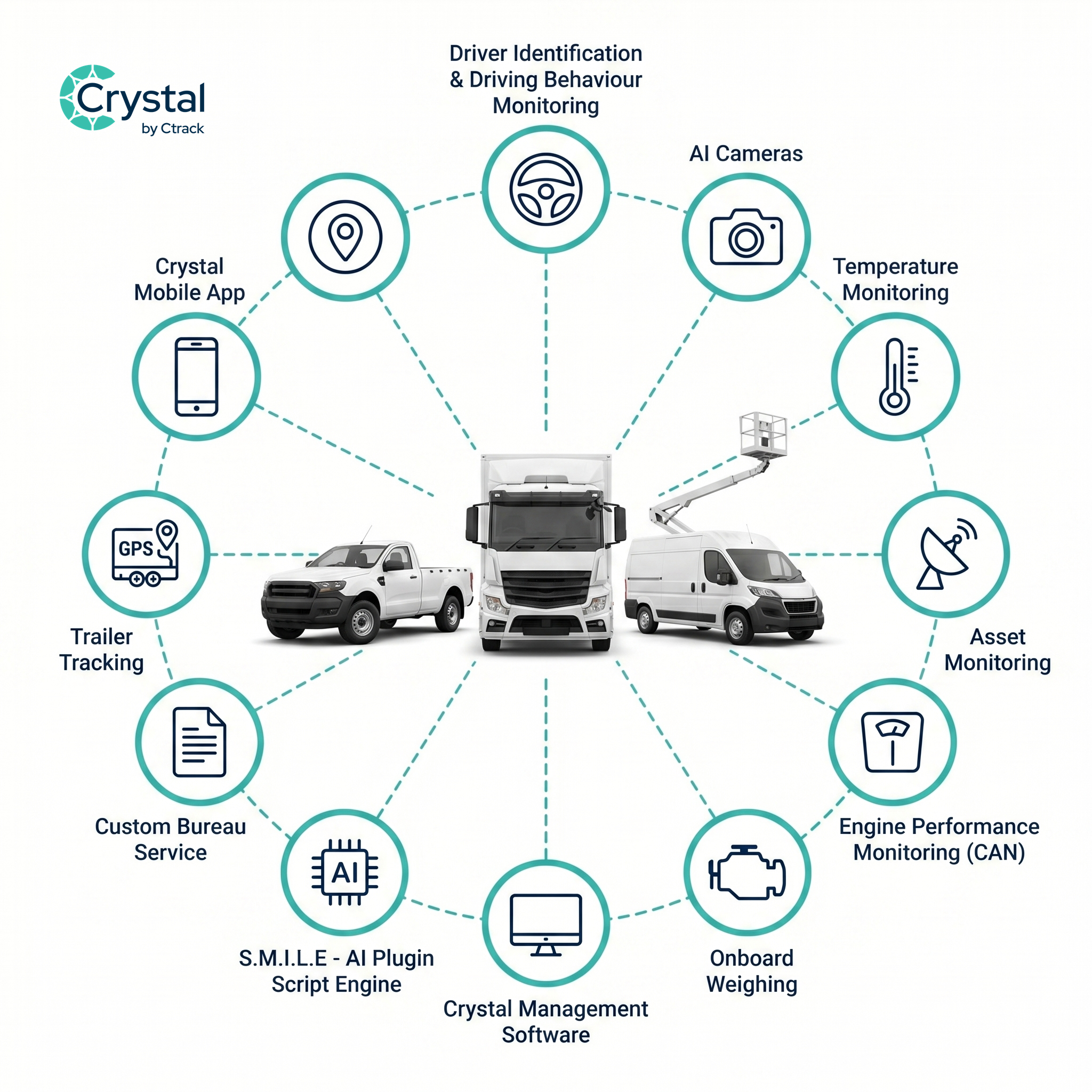
Modern GPS trackers do more than record location. Many read engine data directly via the vehicle's CAN bus, capturing fuel consumption, engine hours, fault codes, and harsh driving events.
- 30+ satellites in orbitContinuous satellite signals calculate your vehicle's position to within a few metres, updated every 10 to 60 seconds.
- Cellular data transmissionLocation data travels from device to cloud platform over cellular networks, making it available on any web or mobile interface.
- CAN bus engine dataAdvanced trackers read fuel consumption, engine hours, fault codes, and harsh driving events direct from the vehicle.
Key Distinctions
GPS Tracking vs Telematics
GPS tracking provides location data. Telematics combines that location with additional vehicle and driver intelligence: engine diagnostics, driver behaviour scores, fuel consumption, and compliance records.
For most NZ fleet operators, the terms overlap in practice. GPS tracking answers where is the vehicle? Telematics answers what is the vehicle doing, how is the driver performing, and is the fleet compliant? Most modern platforms, including GPS fleet tracking systems like Ctrack's Crystal, provide both in a single dashboard with one login and one support contact.
Choosing between basic GPS tracking and full telematics depends on your fleet size, compliance obligations, and the level of insight you need to run a productive operation.
- GPS trackingAnswers where is the vehicle: live location, trip history, geofence alerts, and speed monitoring.
- TelematicsExtends GPS with engine diagnostics, driver behaviour scores, fuel data, and compliance records in one platform.
Business Impact
Real-Time Vehicle Tracking for NZ Fleets
Fleet tracking built on GPS delivers measurable results. Fleet tracking technology returns an average 300% ROI, with most businesses recovering implementation costs within three months of deployment (Frost and Sullivan).
Route optimisation reduces fuel expenses by 10 to 15 percent. For a 50-vehicle fleet spending $7,000 per vehicle on fuel annually, that is $35,000 to $52,500 back in the budget each year.
GPS-tracked vehicles also recover after theft at significantly higher rates. In New Zealand, approximately 12,000 vehicles are stolen each year (NZ Police). GPS-tracked vehicles are recovered at over 80 percent, compared to around 20 percent for untracked vehicles.
- Live vehicle locationSee every vehicle's position on a live map without calling drivers, at any time of day.
- Trip replayReplay any trip from the past months to resolve customer disputes or verify driver activity accurately.
- Geofence alertsAutomatic alerts when vehicles enter or leave depots, customer sites, or restricted zones.
- Fuel cost reductionRoute optimisation cuts fuel expenses by 10 to 15 percent through smarter route planning and reduced idle time.
NZ Compliance
GPS Tracking and NZ Compliance
GPS tracking is increasingly central to compliance for NZ commercial fleets. Road User Charges (RUC) apply to all diesel vehicles, all heavy vehicles, and electric vehicles from April 2024. A GPS-based distance tracking system gives fleet managers accurate odometer records for RUC licence management and off-road refund claims for farming, forestry, and construction operations.
New Zealand's work time rules under the Land Transport Act limit commercial vehicle drivers to 13 hours of driving in any 24-hour period. GPS tracking with automated alerts helps you monitor hours without relying on manual logbooks, reducing the risk of accidental violations and supporting NZTA compliance obligations.
The digital RUC transition expected by 2027 will make GPS-based distance tracking standard practice for every commercial vehicle type in NZ.
- Road User Charges (RUC)GPS distance records support accurate RUC licence management and off-road refund claims for eligible operations.
- Driver hours monitoringAutomated alerts for the 13-hour daily driving limit under the Land Transport Act, without relying on manual logbooks.
- Digital RUC 2027GPS-based distance tracking will become standard for all NZ commercial vehicles ahead of the digital RUC transition.
Hardware Guide
Types of GPS Trackers
GPS tracking hardware comes in several forms depending on what you need to track. Choosing the right device depends on your vehicle types, update frequency requirements, and whether you need full telematics data alongside location.
Hardwired trackers connect to a vehicle's power supply for continuous, reliable tracking. These suit cars, vans, and trucks where a permanent installation is practical. OBD plug-in trackers connect to the diagnostic port for a simpler install, working well for light commercial fleets and temporary deployments.
Battery-powered GPS trackers monitor trailers, containers, and non-powered assets without any vehicle wiring. Premium battery GPS trackers can last 7 to 10 years on hourly location updates, making them practical for assets that move infrequently.
- Hardwired trackersConnected to the vehicle's power supply for continuous, reliable tracking on cars, vans, and trucks.
- OBD plug-in trackersPlug into the diagnostic port for a quick install. Ideal for light commercial fleets and temporary deployments.
- Battery-powered trackersTrack trailers, containers, and non-powered assets. Battery life up to 7 to 10 years on hourly updates.
GPS Fleet Tracking