
What Is Fleet Tracking?
Fleet tracking is the use of GPS technology, cellular networks, and onboard devices to monitor the real-time location, movement, and performance of commercial vehicles. For fleet managers across New Zealand, it provides continuous visibility into where your vehicles are, how drivers are performing, and what is happening across your entire operation.
How it works
How Fleet Tracking Works
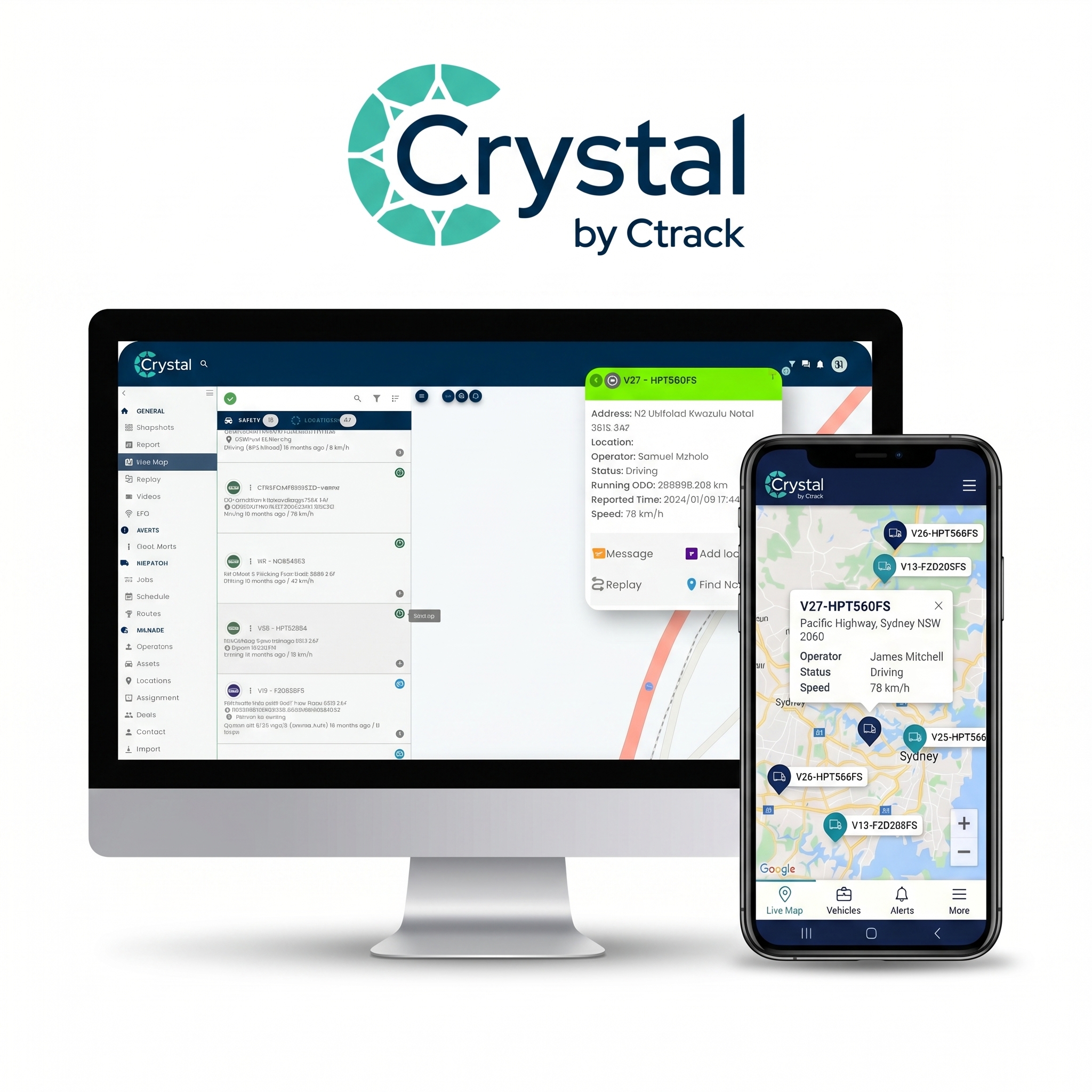
A GPS tracking device installs in each vehicle. The device picks up signals from the satellite network to calculate precise location, speed, and direction. That data transmits over the mobile network to a cloud-based fleet management platform where your team sees a live tracking map of all vehicles, reviews historical trip data, and receives automatic alerts.
For vehicles in areas with limited cellular coverage, the tracking device stores data locally and uploads when connectivity returns. Some systems also use satellite transmission for remote operations such as forestry, mining, and rural delivery routes where mobile network coverage does not reach.
Most commercial GPS vehicle tracking systems update every 10 to 60 seconds, giving you a real-time GPS tracking picture of fleet activity throughout the working day.
- GPS device per vehicleInstalled in each vehicle to pick up satellite signals for precise location, speed, and direction.
- Cloud-based platformLive tracking map, historical trip data, and automatic alerts all in one central dashboard.
- Coverage gap resilienceStores data locally when cellular coverage drops, then uploads automatically on reconnection.
Data captured
What a Fleet Tracking System Records
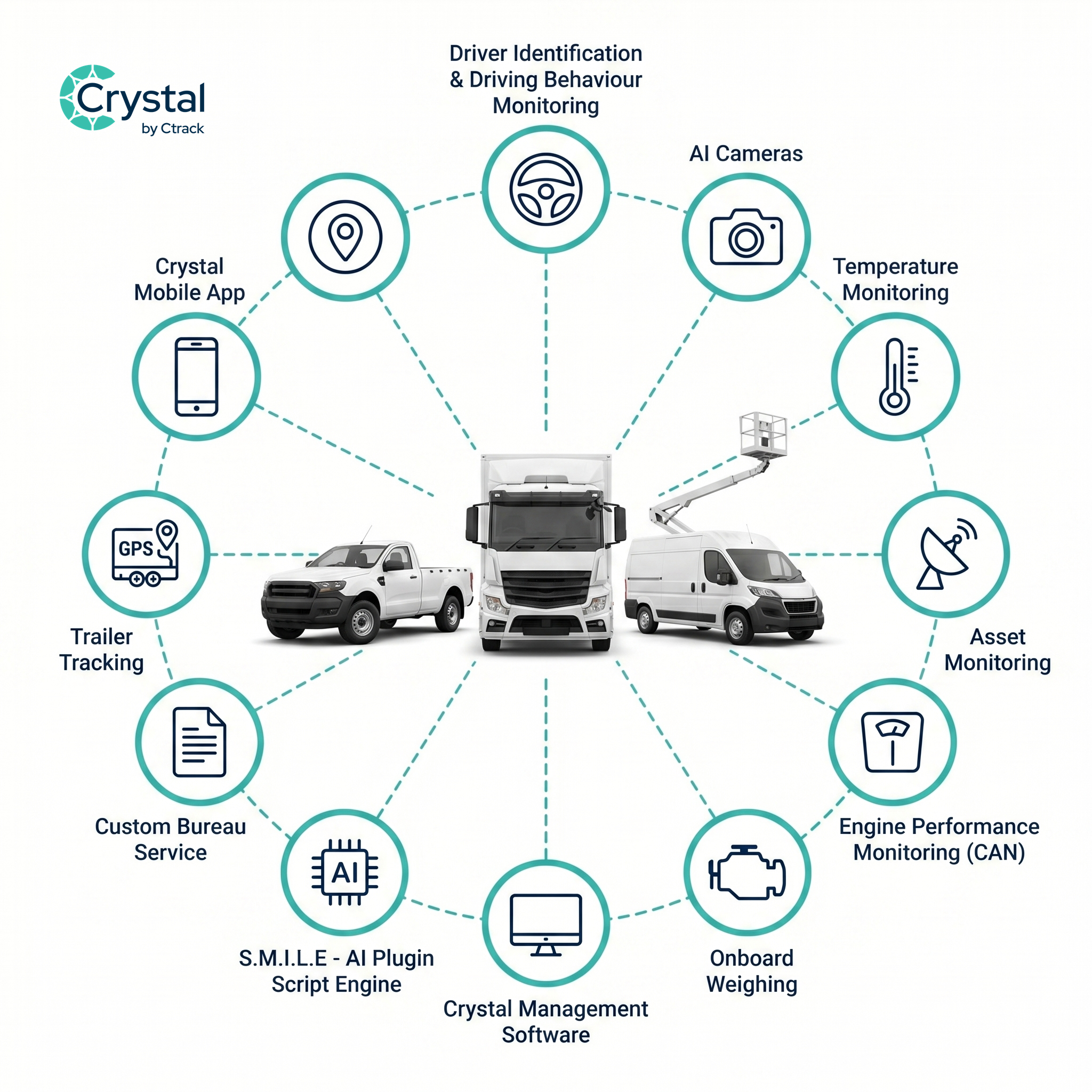
Modern vehicle tracking captures far more than GPS location. A standard tracking system records live vehicle position and heading, full route history with timestamps and stop durations, driver behaviour events such as speeding, harsh braking, rapid acceleration and cornering, idle time when the engine runs with no movement, geofence events when vehicles enter or leave defined zones, and vehicle diagnostics where the tracking device reads CAN bus data.
You access this data through a central dashboard that provides fleet analytics, driver scorecards, and a range of reports covering distance, idle time, and fuel use. Fleet tracking software delivers insights into vehicle utilisation and driver performance that help you reduce costs and improve fleet productivity.
- Location and speedLive vehicle position, heading, and speed on a real-time GPS tracking map.
- Trip history and stopsFull route with timestamps, distances, and stop-by-stop timeline for every vehicle.
- Driver behaviour dataSpeeding events, harsh braking, rapid acceleration, and cornering scores per driver.
- Idle time monitoringEngine-on records with no vehicle movement to support fuel waste identification and reduction.
Fleet tracking vs GPS fleet tracking
Fleet Tracking vs GPS Fleet Tracking
The terms are used interchangeably in most New Zealand business contexts. Fleet tracking refers broadly to tracking for businesses operating a group of commercial vehicles. GPS fleet tracking specifies that GPS satellite technology is the primary positioning method, which is the standard for virtually all modern fleet tracking systems. For most NZ fleet operators, GPS fleet tracking combined with cellular transmission delivers the accuracy and reliability your operation needs day-to-day.
NZ compliance and safety
Fleet Tracking for NZ Businesses
New Zealand businesses running commercial vehicles face specific obligations that GPS tracking directly supports.
Under the Health and Safety at Work Act (HSWA), every PCBU must manage the risks their workers face on the road. Driver behaviour data from a fleet tracking system helps you improve driver safety and provides documented evidence of your safety management steps, supporting duty-of-care obligations and WorkSafe NZ requirements.
For diesel and heavy vehicle operators, fleet tracking supports NZTA compliance for Road User Charges (RUC). GPS-generated odometer data is auditable and reduces the risk of licence shortfalls and penalties. Around 12,000 vehicles are stolen in New Zealand each year. GPS-tracked vehicles recover at rates above 80%, compared to under 20% for untracked assets.
- HSWA duty of careDriver behaviour data documents your safety management steps for WorkSafe NZ requirements.
- NZTA RUC complianceGPS-generated odometer data supports accurate, auditable Road User Charges records.
- Stolen vehicle recoveryGPS-tracked vehicles recover at rates above 80%, compared to under 20% for untracked assets.
Fleet Tracking Questions
Common questions about fleet tracking from New Zealand fleet managers.
GPS fleet tracking NZ
See Fleet Tracking in Action for Your NZ Operation
Book a demo with the Ctrack NZ team and see how GPS fleet tracking can improve visibility, reduce costs, and support compliance across your fleet.